Google Ads vs Facebook Ads: Which Works Best for Your Business?

digipronix
October 19, 2026Every business with an advertising budget eventually asks the same question: Google Ads vs Facebook Ads which one should you choose? Both platforms can help you reach customers, but they work in different ways.
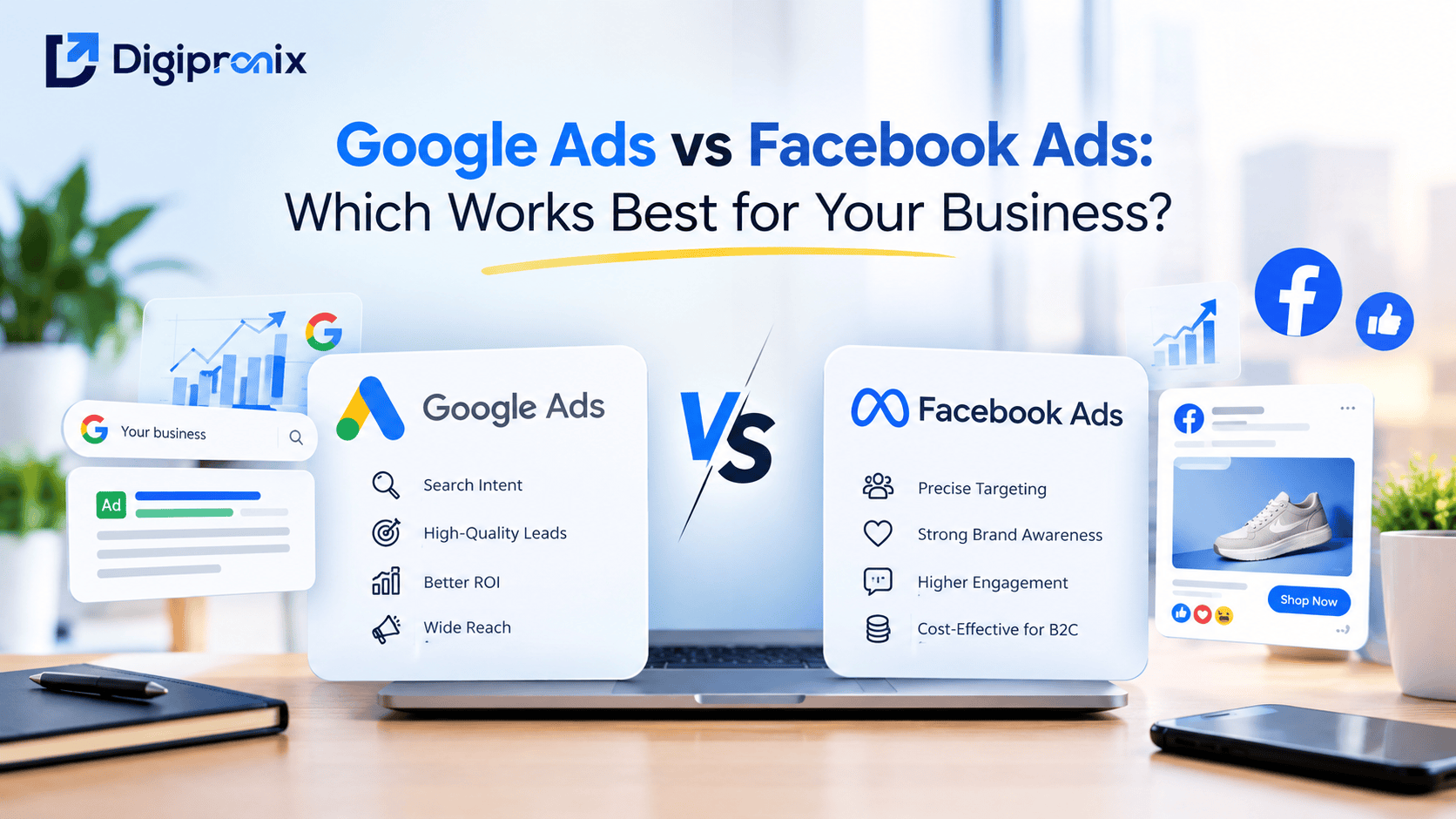
The major difference is how they reach people. Google Ads shows your business to people who are already searching for your products or services, while Facebook Ads helps you reach people based on their interests, behavior, and profile. Both are important parts of PPC advertising and can be used to reach different audiences.
Your strategy must reflect your brand identity, target vertical, and core mission. This guide compares Google Ads vs Facebook Ads Cost, targeting, and performance to help you decide which platform may work better for your business.
What are Google Ads and Facebook Ads?
Google Ads: paid search
Google Ads enables businesses to run ads that target specific individuals looking for certain products or services via Google. It largely runs on a pay-per-click system, meaning that payment is made only when the ad is clicked. The ads can be displayed through Google Search, YouTube, Display, Shopping and other Google properties. It is very helpful in targeting individuals interested in the offers.
Facebook Ads
Facebook Ads target the client depending on their interests, behavior, location, among other aspects. This implies that there is no need for the client to search for a specific product or service to be targeted by the ad. The business owner has options such as pictures, videos, stories, Reels, and more to advertise their products or services.
Google Ads vs Facebook Ads: What’s the Difference?
Google Ads and Facebook Ads both help businesses reach customers, but they differ in how they target people, show ads, and drive results.
| Factor | Google Ads | Facebook Ads |
|---|---|---|
| How it works | Shows ads when people search for products, services, or information on Google | Shows ads to people while they browse Facebook and Instagram |
| User intent | Reaches people who are already searching for something they need | Reaches people who may not be searching but may be interested in your offer |
| Targeting | Uses keywords, search intent, location, audience, and other campaign settings | Uses interests, demographics, behavior, location, and custom audiences |
| Best for | Capturing existing demand, generating leads, and driving sales | Building awareness, reaching new audiences, generating leads, and remarketing |
| Ad formats | Search, Display, Shopping, YouTube, and other Google ad formats | Image, video, carousel, Stories, Reels, and other Meta ad formats |
| Customer journey | Often reaches customers closer to making a purchase or enquiry | Often helps introduce your business and build interest before a purchase |
| Visual content | Important for Display, YouTube, and visual ad campaigns | Very important for image, video, Stories, and Reels ads |
| Cost | Costs can vary based on keywords, competition, industry, and campaign settings | Costs can vary based on audience, competition, ad quality, and campaign settings |
| Main strength | Reaches people based on what they are actively searching for | Helps businesses reach and discover potential customers based on their interests |
How Google Ads Works
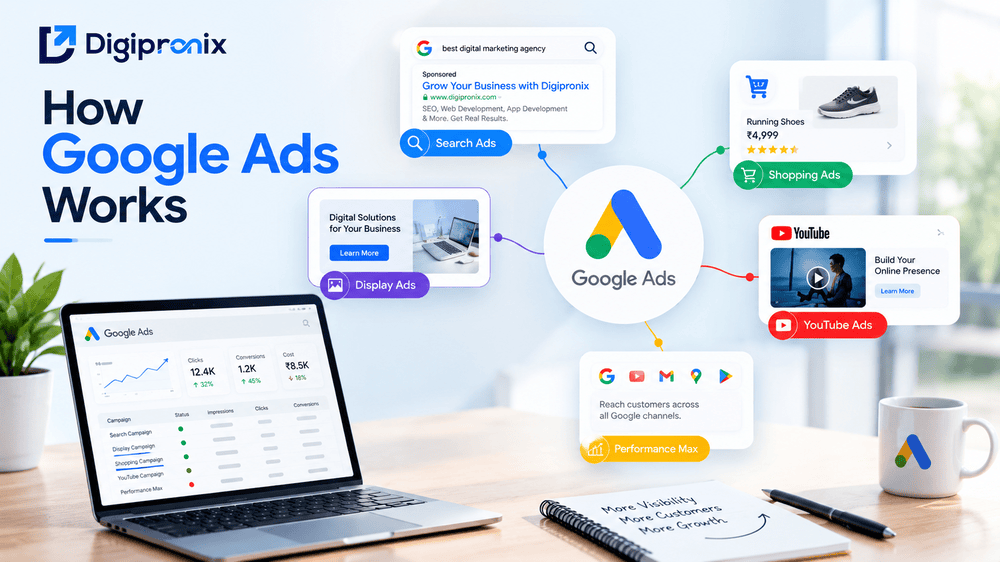
Google Ads works mainly on a pay-per-click (PPC) model. You choose relevant keywords, create your ad, and set a budget. When people search for related terms, your ad may appear in the search results.
The main advantage is search intent. People are already looking for a product or service, so you can reach them when they may be ready to take action.
Google Ads can include:
- Search Ads: Show in Google search results
- Display Ads: Show across websites and apps
- Shopping Ads: Promote products with images and details
- YouTube Ads: Reach people through video
- Performance Max: Run campaigns across multiple Google channels
How Facebook Ads Works
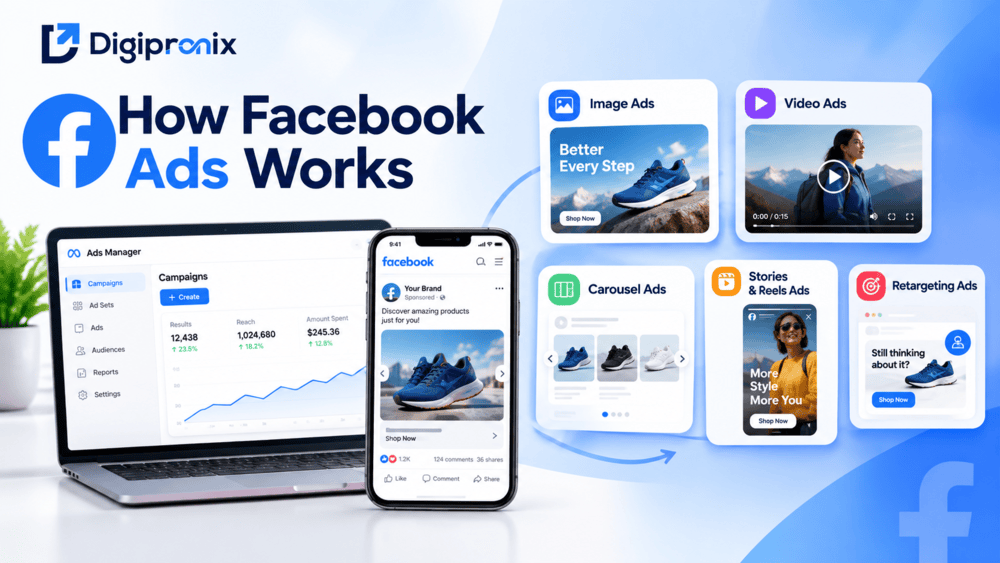
Facebook Ads uses an audience-based approach. Instead of mainly targeting search keywords, you can show ads to people based on factors such as their interests, location, demographics, behavior, and previous interactions.
People do not need to search for your product or service to see your ad. This makes Facebook Ads useful for creating awareness and reaching potential customers who may be interested in what you offer.
Facebook Ads can include:
- Image Ads: Promote products or services with images
- Video Ads: Use videos to explain or promote an offer
- Carousel Ads: Show multiple images or products
- Stories & Reels Ads: Reach people through short-form content
- Retargeting Ads: Reach people who have already interacted with your business
When Should You Choose Google Ads or Facebook Ads?
The right advertising platform depends on your business goals, target audience, product or service, and how customers usually find your business.
Choose Google Ads If…
Choose Google Ads when people are already searching for the products or services you offer. It can help you reach customers with clear search intent and drive leads, enquiries, or sales.
Google Ads can be useful when you want to:
- Generate leads from search traffic
- Reach customers with buying intent
- Promote products or services people actively search for
- Drive sales or enquiries
- Target specific keywords and locations
Example: Someone searches for “web development company.” A web development business can use Google Ads to appear for relevant searches.
For businesses that depend on people actively searching for their services, Google Ads Vs Facebook Ads is an important comparison because search intent can play a major role in lead generation.
Choose Facebook Ads If…
Choose Facebook Ads when you want to reach people who may be interested in your product or service, even if they are not actively searching for it. It can help businesses build awareness, reach new audiences, and promote visual content.
Facebook Ads can be useful when you want to:
- Build brand awareness
- Reach specific audiences
- Promote a new product or offer
- Generate leads
- Retarget website or social media visitors
- Use images, videos, Stories, or Reels to attract attention
Example: A clothing brand can use Facebook and Instagram Ads to promote a new collection to people interested in fashion.
For brands focused on awareness, visual content, and audience discovery, Facebook Ads vs Google Ads can be an important comparison when planning where to spend the advertising budget.
Choose Both If…
Using Google Ads and Facebook Ads together can be useful when you want to reach customers at different stages of the buying journey. One platform can help create awareness and interest, while the other can capture people who are actively searching.
Using Google Ads and Facebook Ads together can help your business connect with customers from awareness to conversion. A strong digital marketing strategy can bring Google Ads, Facebook Ads, SEO, content, and other channels together to support your overall business goals.
Using both platforms can help you:
- Build awareness and generate direct leads
- Reach customers at different stages of the buying journey
- Promote products and capture related search demand
- Use remarketing to reconnect with interested visitors
- Combine audience targeting with search intent
Example: Facebook Ads can introduce your product or service to potential customers, while Google Ads can reach people who later search for it. Using both can help your business connect with customers from awareness to conversion.
Which Platform Is Better for Different Types of Businesses?
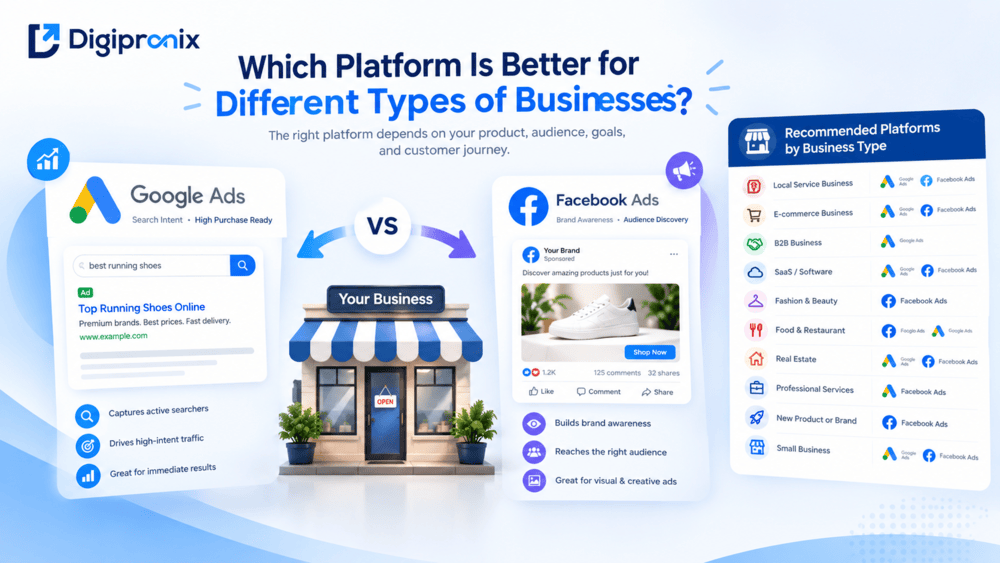
For Google Ads vs Facebook Ads for small businesses, there is no single option that works for every business. The right platform depends on the product, audience, goals, and customer journey.
| Business Type | Recommended Platform |
|---|---|
| Local Service Business | Google Ads + Facebook Ads |
| E-commerce Business | Google Ads + Facebook Ads |
| B2B Business | Google Ads |
| SaaS / Software | Google Ads + Facebook Ads |
| Fashion & Beauty | Facebook Ads |
| Food & Restaurant | Facebook Ads + Google Ads |
| Real Estate | Google Ads + Facebook Ads |
| Professional Services | Google Ads |
| New Product or Brand | Facebook Ads |
| Small Business | Google Ads + Facebook Ads |
Both platforms can work for different types of businesses, but their strengths are different. Google Ads focuses more on search intent, while Facebook Ads is useful for audience discovery, awareness, and visual promotion.
Google Ads vs Facebook Ads: Which Has Better Targeting?
Both Google Ads and Facebook Ads come with a strong set of targeting options, but they proceed to reach customers in very different ways. Google Ads focuses mainly on what people are actually looking for on the web, whereas Facebook Ads targets who these people are and what they like.
Google Ads Targeting
Google Ads allows businesses to target people based on:
- Keywords: Reach people searching for specific products or services.
- Location: Target customers in specific cities, areas, or regions.
- Search intent: Reach people based on what they are actively looking for.
- Demographics: Refine audiences using factors such as age and other available audience signals.
- Remarketing: Reach people who have previously visited or interacted with your business.
Facebook Ads Targeting
Facebook Ads offers audience-based targeting options such as:
- Demographics: Target people based on factors such as age, location, and other audience details.
- Interests: Reach people interested in specific topics, products, or activities.
- Behaviors: Use available behavior and activity signals to refine your audience.
- Custom Audiences: Reach people who have already interacted with your business.
- Lookalike Audiences: Find new people with similar characteristics to an existing audience.
- Retargeting: Reconnect with people who have previously visited your website or interacted with your business.
In simple terms, Facebook Ads vs Google Ads comes down to how you want to reach potential customers: Google focuses more on search intent, while Facebook offers more audience-based targeting options.
Conclusion
There is no one winner when looking at Google Ads vs Facebook Ads for small business. One platform may work better for a business that depends on search traffic, while the other may be more useful for building awareness and reaching new audiences.
What matters is what the goals of the business are, its target market, the available budget, and the stage in the customer journey where the customers are at. For this reason, sometimes a business might be better served by utilizing both channels for advertising.
If you need help planning and managing paid advertising campaigns, Digipronix provides Google Ads and Facebook Ads services to help businesses reach the right audience and generate meaningful results.