
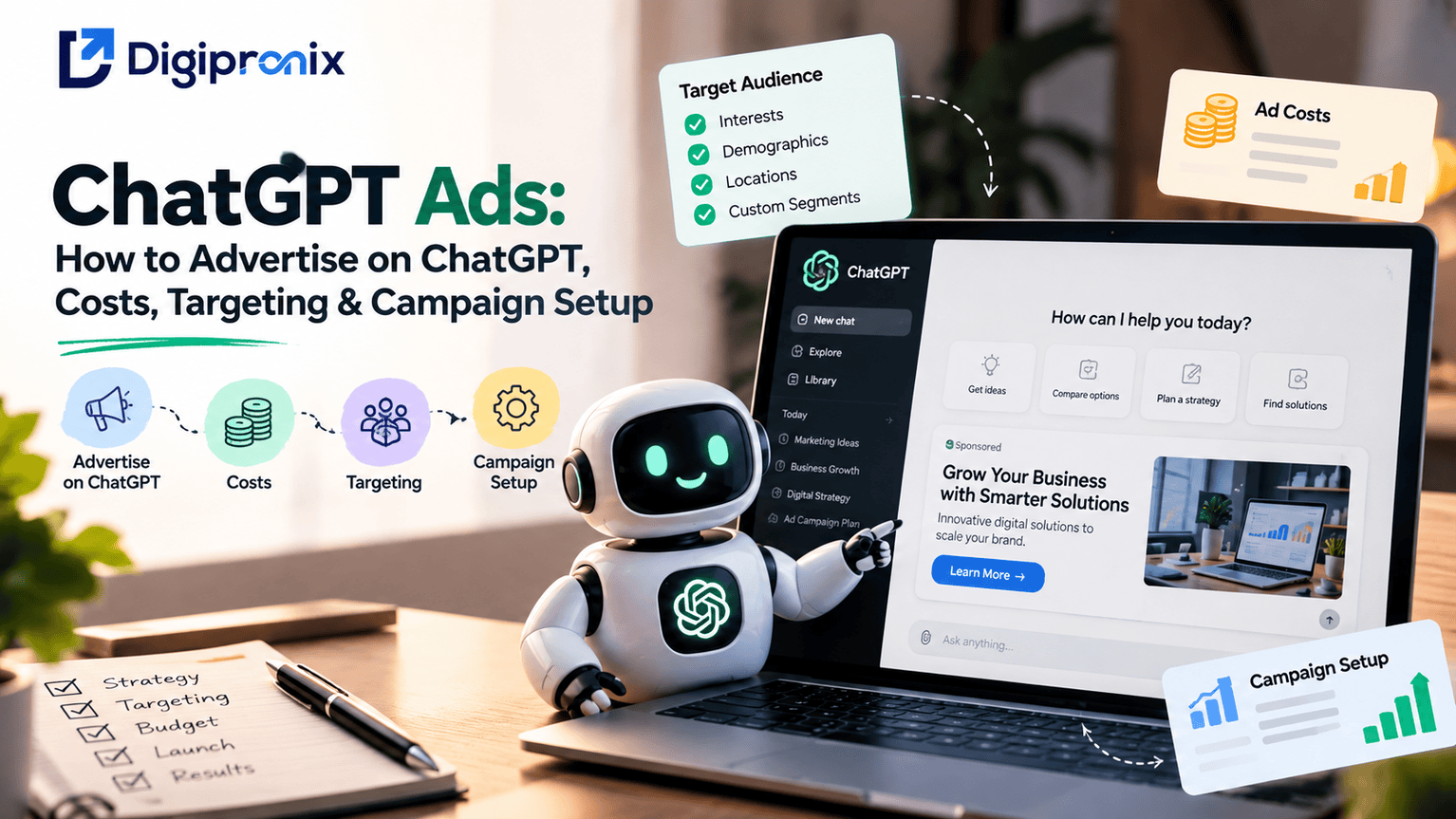
ChatGPT Ads: How to Advertise on ChatGPT, Costs, Targeting & Campaign Setup

digipronix
October 19, 2026ChatGPT is becoming an ever more popular tool for people doing research on a product, comparing their options, looking for solutions to a problem, and deciding what they want to purchase. This presents a unique business opportunity: ChatGPT Ads.
While search advertising is mostly about working with keywords and searches, ads on ChatGPT are based on a more complex and richer conversational context. Ads can be matched through various signals, such as the conversation context and intent, landing pages, ad copy, and advertiser hints about context.
For businesses that are already spending time on Google Ads vs Facebook Ads: Which Works Best for Your Business?, SEO, and social media, ChatGPT Advertising becomes one more platform to learn about.
This article will tell you about ChatGPT Ads, pricing and targeting, how to advertise on ChatGPT, and what to take into account when starting a campaign.
What Are ChatGPT Ads?
ChatGPT Ads are paid advertisements displayed within the ChatGPT experience. OpenAI describes them as a way for businesses to reach people as they explore options, compare products or services, and make decisions.
An ad can include elements such as:
- Advertiser name
- Headline
- Description
- Image or creative
- Landing page
Ads are clearly identified and kept separate from ChatGPT’s generated answers.
The major difference is intent.
Someone searching Google for “best CRM software for small business” is already expressing a specific search query. Someone using ChatGPT might describe their business problem in several sentences and ask for recommendations.
That conversational context gives advertisers a different way to reach potential customers.
Why Marketers Are Paying Attention to ChatGPT Ads
However, it is also another avenue that customers use to search for products, get information about possible solutions to their problems and compare them. Here are some of the factors driving organizations to try ChatGPT Advertising:
The rise in the usage of AI-based search: More and more people now use AI services to conduct their research or look for recommendations. This shift also makes AI SEO increasingly important as businesses look beyond traditional search and consider how their brands appear across AI-driven search experiences.
Context-based intent: Conversations within ChatGPT give you a clue about the intention of the person, which makes your advertisement more relevant.
Newer advertising channel: In comparison with more traditional channels such as Google Ads and Meta Ads, there is less competition in AI advertising.
Proximity to making a decision: If the customer comes across your advertisement while researching and comparing products, they may be ready to decide.
ChatGPT Ads: Costs & Targeting
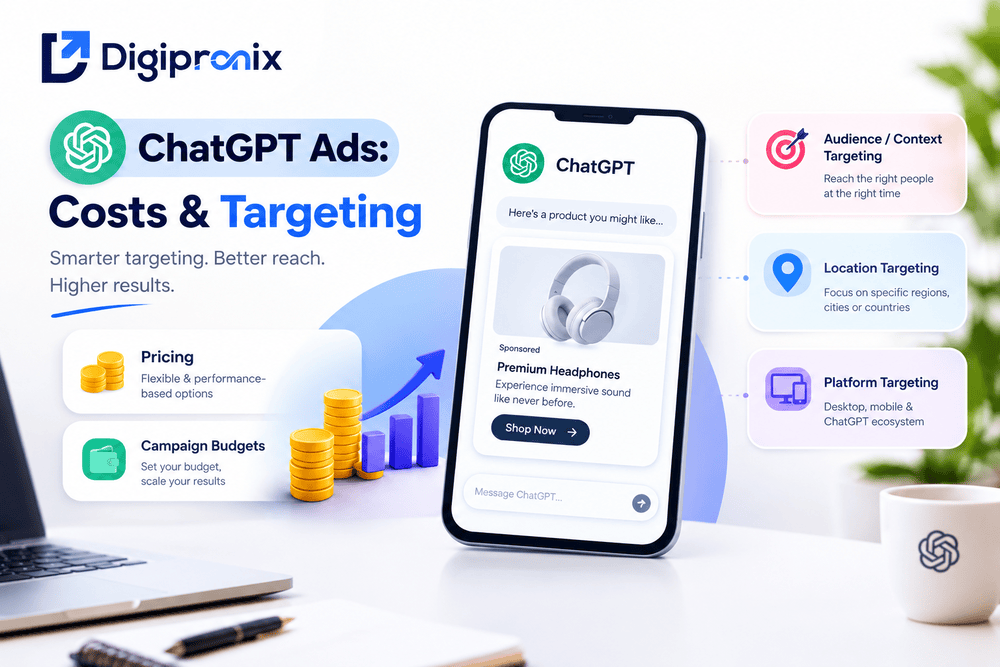
The ChatGPT Ads cost and targeting options depend on your campaign objective, audience, and advertising setup. Before launching, it helps to understand the main factors that can affect your campaign.
- ChatGPT Ads Pricing: ChatGPT Ads can use different pricing models, including CPM for impressions, CPC for clicks, and conversion-focused campaigns, depending on the objective selected.
- Campaign Budgets: Advertisers can set a daily or total campaign budget based on their goals. Start with a manageable budget, collect performance data, and adjust spending based on results.
- Audience & Context Targeting: ChatGPT Advertising can use conversation context and intent alongside signals such as ad content and landing-page relevance. This makes relevance especially important when creating your campaign.
- Location & Platform Targeting: Campaigns can be configured around supported locations and platforms, helping businesses focus their advertising on the markets and placements that matter most to them.
How to Advertise on ChatGPT
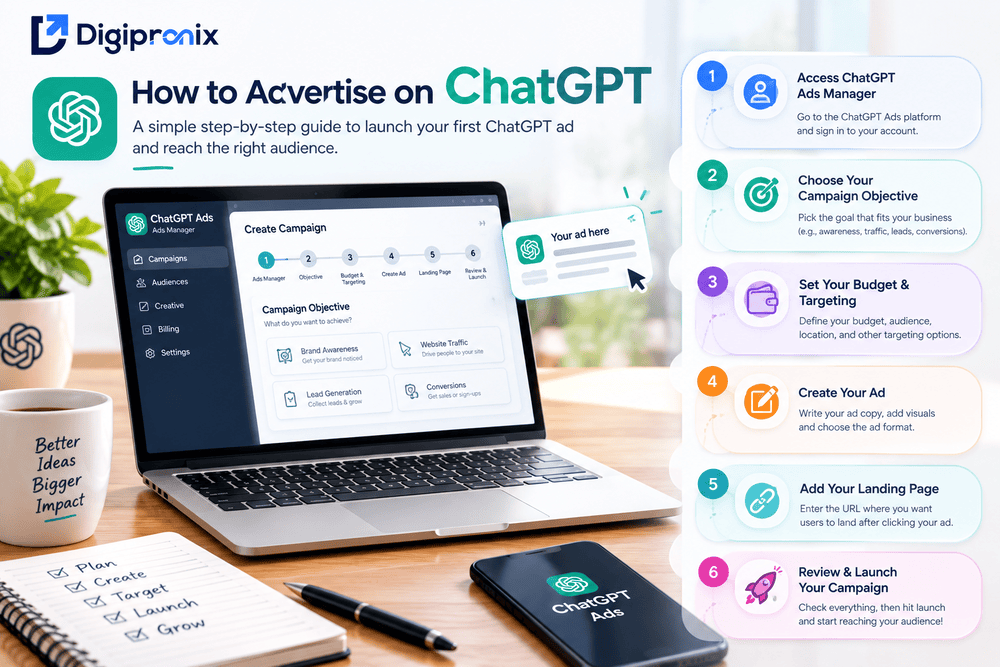
In case you decide to advertise via ChatGPT, the advertising will happen via OpenAI’s Ads Manager, where businesses can create an advertiser account, set up billing and verification and launch and manage their campaigns.
1. Access ChatGPT Ads Manager
The first thing to do is log into your Ads Manager account, or sign up for one. For now, the Ads Manager can be found at ads.openai.com. It includes business details, billing, payments and the verification process.
Do not spend any money before making sure your business, website, offer and tracking system are ready for it.
2. Choose Your Campaign Objective
The objective of your campaign sets up how the optimization and payment happen.
Depending on the available objectives, it could be an objective related to views, clicks, or conversions. Choosing the right objective is also a core part of any PPC advertising strategy, where campaigns are built around measurable actions and business goals.
Set the objective that is consistent with your real business goals.
For instance:
Awareness building → Views
Website traffic driving → Clicks
Conversion generating → Conversions
Do not pick the most advanced objective without a reason. The objective should be the same as you can actually track.
3. Set Your Budget & Targeting
Either set a daily or campaign budget, then set up your location and platform targeting for where your campaign will appear. Available targeting methods can depend on market and account.
You could also use custom audiences as appropriate.
As far as targeting goes, you should think in terms of relevance over maximum possible reach. An audience that is highly relevant to what you are offering might prove more valuable than a wider but less interested one.
4. Create Your Ad
Three things must be communicated in your ad copy:
What are you offering? To whom is it offered? And why should they care?
According to OpenAI, it’s recommended to create clear and specific ads highlighting benefits rather than generic ones. It’s also recommended to build multiple versions for more variety.
Your ad headline, description, creative, and landing page should all be consistent.
5. Add Your Landing Page
The ad captures the user, but the landing page must convert.
Redirect the user to a page that reflects the offer stated in the ad. If there is no need for everyone to be taken to the homepage, ensure you direct them to the more relevant service or product page.
A clear message on what the visitor needs to do next, such as completing the form, requesting a quote, purchasing a product, or scheduling an appointment.
6. Review & Launch Your Campaign
Take time to look at the targeting, budget, creative content, landing page, conversion setup, and billing details before launching your campaign.
Do not think that launching the campaign marks the end of the work. Use the early data collected to determine what needs to change next.
Try out different messages, audiences, landing pages, and creative ideas, but not everything at once.
How Do You Track ChatGPT Ads Conversions?
Traffic alone doesn’t tell you whether ChatGPT Ads are producing business results.
Track the actions that matter to your business, such as:
- Form submissions
- Purchases
- Sign-ups
- Bookings
- Qualified leads
- Other valuable website actions
OpenAI allows conversion-based campaign creation and tracking facilities, and Ads Manager helps analyze the performance of campaigns. The Ads Manager from OpenAI could even integrate with Google Analytics 4, when applicable.
Be aware of metrics like impressions, clicks, CTR, CPC, conversions, conversion rate, and cost per conversion.
From an agency’s perspective, perhaps the metric that is most important could be another level up: cost per qualified lead or revenue made.
Even if a campaign boasts a high CTR, it will not be a commercial success if visitors don’t turn into customers.
How Are ChatGPT Ads Different From Google Ads & Meta Ads?
ChatGPT Ads, Google Ads, and Meta Ads can all contribute to a paid acquisition strategy, but they operate in different environments.
| Platform | Core environment | Strong opportunity |
|---|---|---|
| ChatGPT Ads | Conversations and AI-assisted decisions | Reaching users through context and intent |
| Google Ads | Search and websites | Capturing active search demand |
| Meta Ads | Social feeds and audience signals | Discovery, awareness, retargeting and demand generation |
Google Ads have the advantage that the user is searching for something.
Meta Ads are good for discovery, storytelling, retargeting, and audience targeting campaigns.
ChatGPT Ads introduce another aspect of intent through conversation.
It does not necessarily mean one type of advertising is going to overshadow other forms of advertising. The key is to know where your channel sits in the context of the customer journey.
Conclusion
ChatGPT Ads are creating a new opportunity for businesses to connect with potential customers through conversation, context, and intent. As more people use AI to research and compare solutions, this channel is becoming worth exploring.
A successful campaign still depends on the basics: a clear objective, relevant targeting, strong ad creative, the right landing page, and accurate conversion tracking. The goal should always be to turn visibility into meaningful business results.
At Digipronix, we help businesses build practical, result-focused digital marketing strategies across SEO, Google Ads, social media, web development, and emerging AI-driven channels. As digital discovery continues to evolve, adapting early can help your brand stay visible and competitive.