
Social Media Marketing for Small Business: Strategies to Get More Leads & Customers

digipronix
October 19, 2026For a small business, attracting the attention of customers is just a first step. The main thing is to translate the attention into enquiries and contacts.
And this is where social media comes into play. Instagram, Facebook, LinkedIn, YouTube, and WhatsApp provide the possibility of communicating with customers to get to know what is offered and how to contact them without enquiring.
However, it doesn’t mean that posting every day guarantees the efficiency of social media. A business can be active on its social media pages but receive few enquiries because the posts may not attract the necessary attention or have a proper impact on the audience.
Thus, social media marketing for small businesses means attracting the attention of the necessary audience.
What Is Social Media Marketing for Small Business?
Social media marketing is the act of promoting one’s business through social media channels like Instagram, Facebook, LinkedIn, and even YouTube. This marketing may involve posts, Reels, reviews, stories, DMs, relevant content, and paid ads.
What method to use is entirely dependent on what the business needs. The idea is not necessarily to be active on all social media, but to be active on those where potential clients can be found.
Why Social Media Marketing Matters for Small Businesses
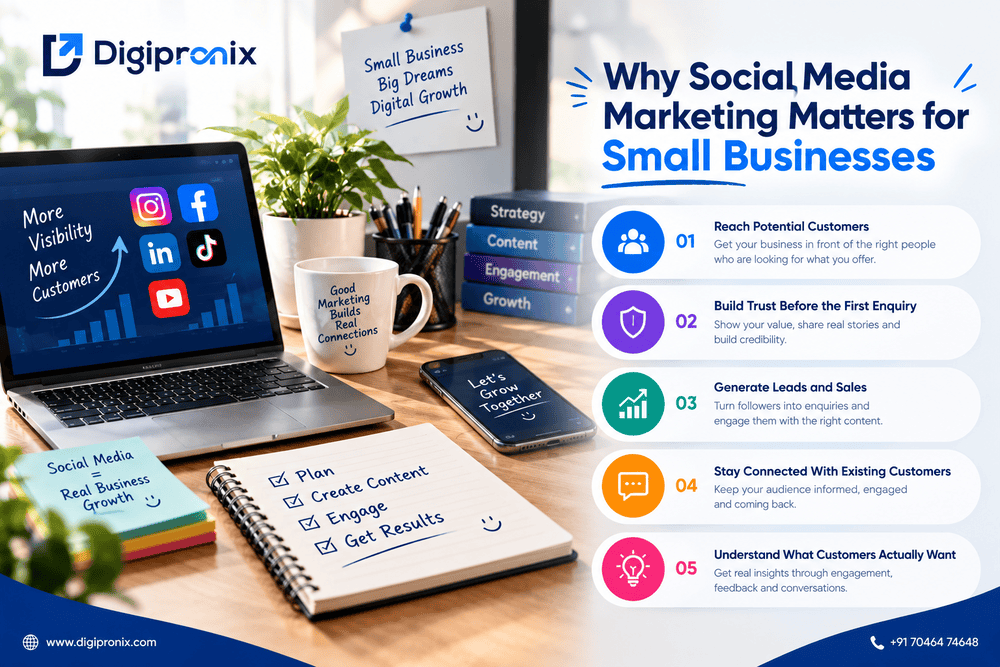
Reach Potential Customers
People get to know businesses through social media even before visiting their websites or making any searches. A good video, a recommendation by a consumer, a demonstration of products, or something posted locally could help you let your business be known to people who were not looking for you minutes before.
This is another chance for small businesses to market themselves without relying completely on marketing.
Build Trust Before the First Enquiry
It is true that most customers need to be sure about something before parting with their cash.
Social media profiles will help in answering these questions before any interaction. What are you selling? Do you have experience in doing it? How are people talking about you? What do you really do?
Reviews, portfolios, behind-the-scenes footage, FAQs, team videos, and testimonials will make your business more authentic and approachable.
Generate Leads and Sales
Social media is not just an avenue for marketing but can also be incorporated into the customer journey process.
A person could start by finding your reel video, follow you on Instagram, visit your site, message you, get a quote from you, and buy something. For businesses that want to accelerate this journey, paid advertising can help put relevant offers in front of a more targeted audience.
With the proper connection of all these processes, social media can help drive business growth.
Stay Connected With Existing Customers
Your existing customers are also an important audience.
Social media gives you a simple way to share new products, useful information, offers, updates, and reminders. Staying visible can encourage repeat purchases and keep your business in customers’ minds when they need your service again.
Your current customers are also a vital audience.
Through social media, it is easy to inform your audience about new products and services that you have, useful information, deals, and even reminders. This will keep you on the radar of your clients.
Understand What Customers Actually Want
Another way social media can help is by providing you with a platform for getting customer feedback.
Listen to what people are asking questions about in the comments and through direct messages. Take note of those areas that have received substantial feedback and the products/services that people continuously inquire about.
How to Build a Social Media Marketing Strategy That Gets Results
Social media marketing is more than just keeping yourself busy online. It must relate your content to a business objective of either creating leads, getting inquiries, building credibility, or making sales.
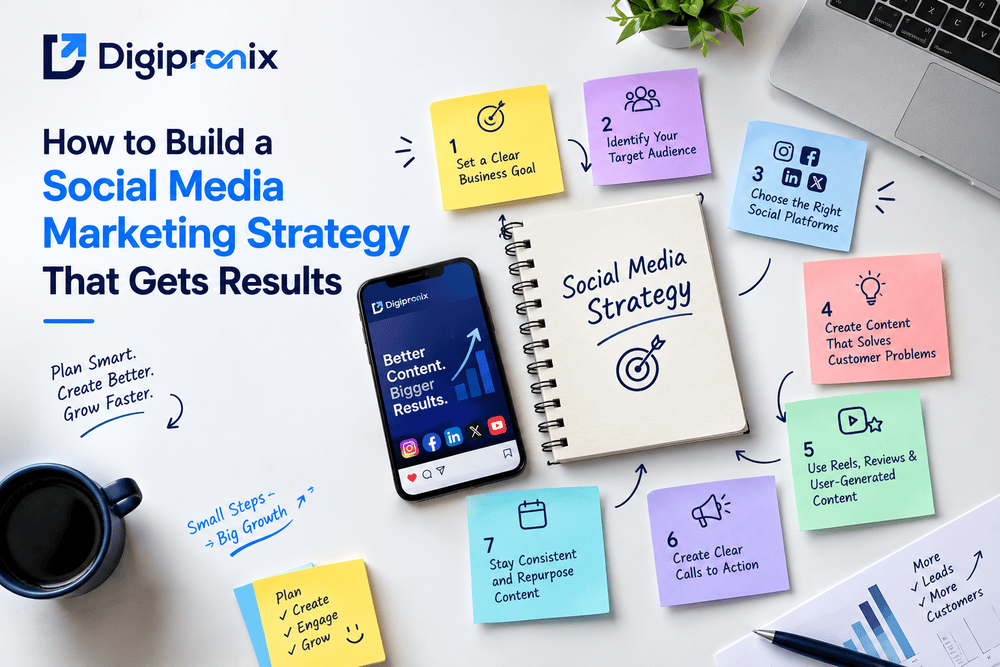
1. Set a Clear Business Goal
Start with the result you actually want from social media.
Instead of saying “We need more followers,” define a measurable goal such as:
- Generate more enquiries
- Increase website visits
- Get more WhatsApp or DM enquiries
- Build awareness for a new service
- Drive product or service sales
A clear goal makes it easier to choose the right content and measure whether your digital marketing strategy is working.
2. Identify Your Target Audience
Your content will work much better when it is talking directly to your target audience.
What is your ideal customer?
Who are they? → What problem do they have? → What are they looking for? → What would make them trust your business?
For small-business social media marketing, knowing the answers to these questions will be much more helpful than just trying to get more followers.
3. Choose the Right Social Platforms
You don’t need to be active everywhere. Focus on the platforms where your potential customers already spend time.
For example:
- Instagram: Reels, visual products, lifestyle and local businesses
- Facebook: Local communities, offers and customer engagement
- LinkedIn: B2B services, professional audiences and industry expertise
- YouTube: Tutorials, demonstrations and educational videos
Good social media for small business marketing is about being present in the right places, not being everywhere.
4. Create Content That Solves Customer Problems
People don’t follow a business simply because it posts regularly. They follow when the content gives them a reason to stop scrolling.
Use a mix of:
Problem → Solution → Proof → Action
For instance, instead of simply pitching an SEO service, show why the company isn’t getting Google enquiries, outline areas that need improvement, and suggest an actionable next step.
This makes your social media marketing techniques more useful and less promotional.
5. Use Reels, Reviews & User-Generated Content
Don’t depend only on designed graphics.
Mix different content formats:
- Reels showing tips, processes or behind-the-scenes moments
- Customer reviews and testimonials
- User-generated content (UGC)
- Quick educational tips
- Team or business stories
- Before-and-after results
Real experiences can make your brand feel more trustworthy and relatable. They also give you more material to build your Social Media Marketing strategies around.
6. Create Clear Calls to Action
Every post doesn’t need to say “Buy Now.” Your CTA should match the purpose of the content.
Try:
Want a free consultation? → Send us a DM.
Need help with your website? → Visit our website.
Want more tips? → Follow our page.
Interested in this service? → Message us today.
A clear next step can turn attention into action and support social media lead generation.
7. Stay Consistent and Repurpose Content
Consistency doesn’t mean creating completely new content every day.
One useful topic can become:
1 Reel → 1 Carousel → 3 Stories → 1 LinkedIn post → 1 short video
Create a realistic posting schedule and keep your messaging consistent. Then review which content brings engagement, enquiries, clicks, or leads and create more around what your audience responds to.
The goal isn’t to post more. It’s to make every post work toward a business result.
In the event that the management of content, engagement, and lead generation within an organization is challenging, it is advisable to work with a social media marketing firm for small businesses.
How to Generate Leads From Social Media
Just being seen is the first stage of the process. Your social media must provide a smooth path for the interested individual to move on to the next stage in the process, which could be contacting you via direct messaging or filling out a form, etc.
Optimize Your Social Media Profile for Leads
Your profile should quickly answer who you help, what you offer, and how people can contact you.
Keep your bio clear, add a relevant service description, and use your website or contact button to guide visitors toward an enquiry.
Use Lead-Focused CTAs
Give people a specific reason to take action instead of using generic phrases like “Learn More.”
Try CTAs such as:
“Get a Free Consultation”
“Send Us Your Requirement”
“Get a Quote”
“Message Us to Get Started”
These small changes can make your social media lead generation efforts more action-oriented.
Use DMs as a Sales Channel
A DM shouldn’t feel like a hard sales pitch. Start by understanding what the person needs, answer their question, and then suggest the relevant service or next step.
For small businesses, this makes social media for small business marketing more personal and easier to manage.
Send Traffic to the Right Landing Page
Don’t send every visitor to your homepage.
If a post promotes SEO services, link directly to the SEO service page. If you’re promoting an offer, send users to a page built specifically for that offer.
Relevant post → Relevant landing page → Clear action
Use Lead Ads When Organic Reach Isn’t Enough
Organics are capable of getting enquiries for your business, but paid advertising will allow you to target a more specific audience.
Through the use of lead ads, you will be able to collect such information from potential clients as names, phone numbers, emails, or any other business-related information.
Used together, these social media marketing techniques can turn your social presence from a content channel into a practical lead-generation system.
Organic Social Media vs Paid Social Media for Small Businesses
Regarding social media marketing for small businesses, organic social and paid social play distinct roles. Organic social will aid your efforts to gain visibility and trust, whereas paid social will allow you to reach your audience quickly and compel them to take action.
| Organic Social | Paid Social |
|---|---|
| Builds trust and community | Expands targeted reach |
| Relies on regular content | Requires an advertising budget |
| Grows gradually | Can generate faster traffic and leads |
| Reels, posts, stories, reviews | Lead ads, promotions, retargeting |
It is not a must that you go for either of them. A social media marketing campaign that works can be established through the utilization of either organic or paid content.
How to Measure Social Media Marketing Success
Don’t judge your results only by follower growth. Look at whether social media is helping your business move closer to its actual goals.
- Visibility: Reach + Impressions
- Interest: Engagement Rate + Profile Visits
- Traffic: Website Clicks + Landing Page Visits
- Leads: DMs + Forms + Calls + Enquiries
- Efficiency: Cost Per Lead
- Business Results: Conversion Rate + Revenue + ROAS
The right metrics depend on your objective. For social media lead generation, leads, conversion rate, and cost per lead are more useful than simply counting likes.
Common Social Media Marketing Mistakes
A few problems can make even regular posting ineffective:
- Posting without a clear business objective
- Trying to manage every social platform at once
- Creating promotional content for every post
- Ignoring comments and DMs
- Using the same content without adapting it to each platform
- Sending ad traffic to an irrelevant page
- Measuring followers instead of meaningful actions
- Changing the strategy before giving it enough time or data
Good strategies for social media marketing should emphasize what pushes the customer towards the next step.
Social Media Marketing Strategy Examples for Small Businesses
The strategy should vary depending on the business; don’t apply just one formula.
- Local Restaurant → Food Reels + customer reviews + location-based content + offers
- Real Estate Business → Property walkthroughs + neighbourhood content + buyer FAQs + enquiry CTAs
- Beauty / Salon Business → Before-and-after content + client experiences + service demonstrations + appointment CTAs
- B2B Service Company → Expert tips + case studies + problem-solving content + LinkedIn conversations
- Ecommerce Business → Product demonstrations + UGC + customer reviews + product-focused ads
This is where a social media marketing agency for small businesses could come in handy by combining all these elements under one umbrella of business-oriented strategy.
Conclusion
A successful social media strategy is not about posting every day or chasing more followers. It is about reaching the right audience, sharing content that solves real problems, encouraging conversations, and creating clear paths from engagement to enquiry. With the right social media marketing strategies, small businesses can build trust, improve visibility, and turn social platforms into a consistent source of opportunities.
At Digipronix, we help businesses create practical social media marketing strategies built around their goals, audience, and industry. From content planning and social media management to paid campaigns and social media lead generation, we focus on turning social media activity into meaningful business results.