
Performance Marketing Strategy: A Complete Guide for Business Growth

digipronix
October 19, 2026Getting clicks is useful, but getting the right people to take action matters more. A performance marketing strategy focuses on leads, sales, and conversions while tracking what your marketing spend delivers.
Instead of looking only at reach or impressions, performance marketing measures clicks, enquiries, purchases, and sign-ups. This shows which channels and campaigns are producing meaningful results.
The goal is not to use every platform. Businesses may use PPC management services alongside other channels to reach the right audience, improve campaigns, and track performance marketing metrics. This makes performance marketing ROI easier to understand.
What Is a Performance Marketing Strategy?
Performance marketing is simple. It’s digital direct marketing. We send out a postcard and try to convert prospects into customers.
A performance marketing strategy is a planned approach built around measurable actions. Businesses first define an outcome, such as generating leads, increasing purchases, driving app installs, or improving customer acquisition.
A local service business may focus on enquiries from Google Ads, while an ecommerce brand may optimize for purchases and revenue.
Types of Performance Marketing Channels
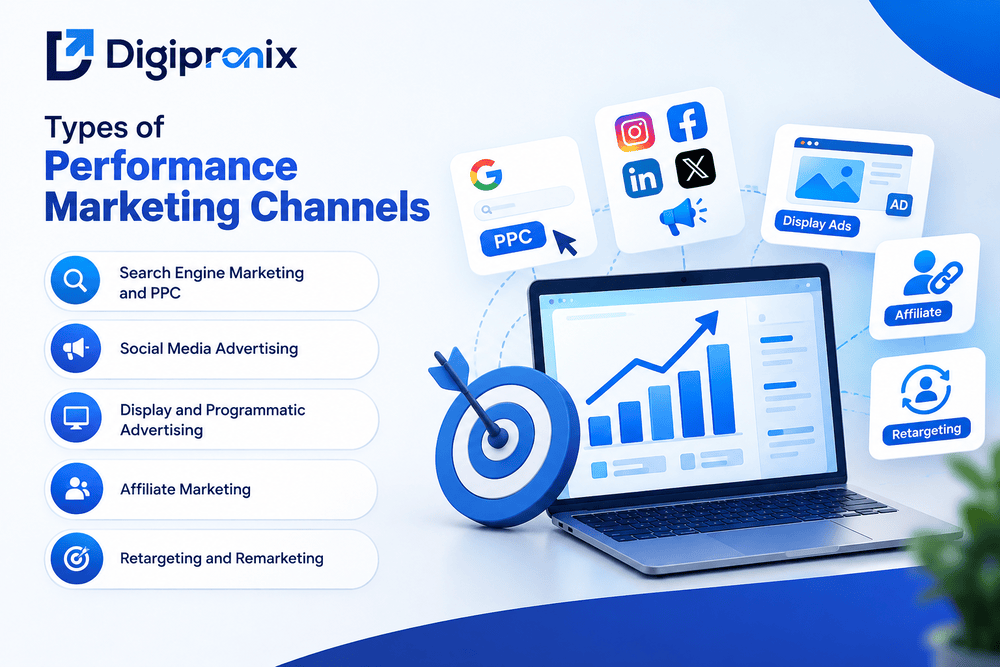
Search Engine Marketing and PPC
Search engine marketing and PPC help businesses reach people who are already searching for a product or service. Google Ads can capture high-intent traffic and drive users toward specific actions. For a broader comparison, see our guide Google Ads vs Facebook Ads: Which Works Best for Your Business?
Social Media Advertising
Social media advertising helps businesses reach specific audiences based on interests, demographics, behaviour, and previous interactions. With the right targeting, creative, and conversion tracking, it can become an important part of performance marketing strategies focused on generating leads and sales. Businesses can also explore Social Media Marketing for Small Business for practical ways to generate more leads and customers.
Display and Programmatic Advertising
Display advertising uses visual ads across websites, apps, and digital platforms to reach potential customers. Programmatic advertising automates ad buying and placement using audience and bidding data, making these channels useful for awareness, retargeting, and supporting broader business growth strategies.
Affiliate Marketing
Affiliate marketing involves working with partners, publishers, or creators who promote a product or service in exchange for a commission on defined results. Because payment is connected to measurable actions such as sales or leads, it can support efficient customer acquisition and trackable campaign performance.
Retargeting and Remarketing
Retargeting and remarketing help businesses reconnect with people who have previously visited a website, viewed a product, or interacted with an advertisement. By bringing interested users back into the customer journey, these campaigns can improve conversions and contribute to stronger performance marketing ROI.
How to Create a Performance Marketing Strategy
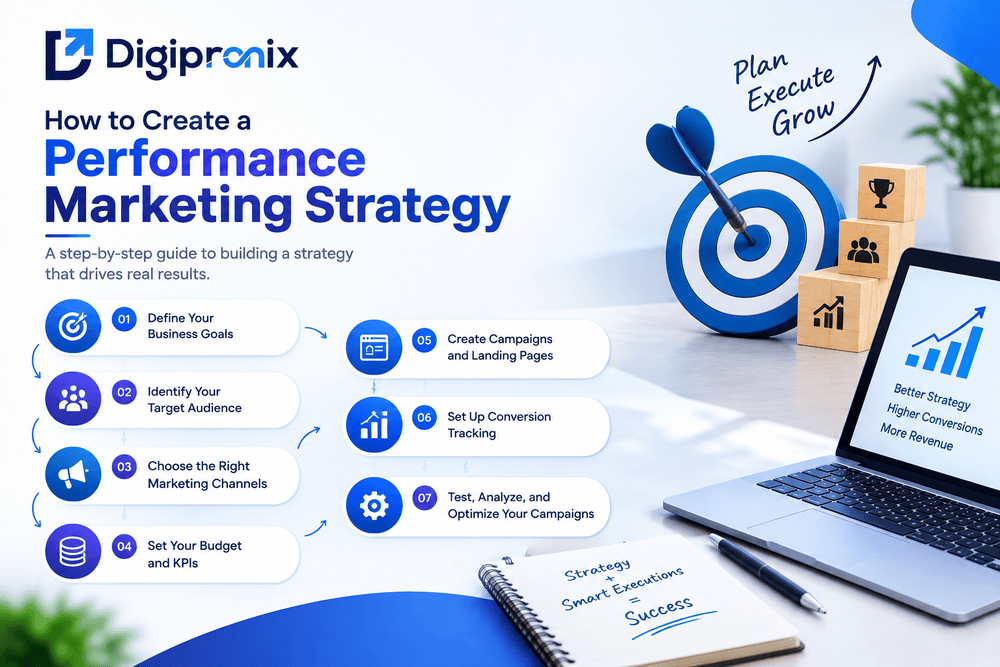
- Define Your Business Goals: Decide what you want to achieve, such as more leads, sales, bookings, or lower acquisition costs.
- Identify Your Target Audience: Understand your ideal customers, their needs, search behaviour, and where they spend time online.
- Choose the Right Marketing Channels: Pick channels based on your audience, budget, offer, and sales cycle. Search and social advertising can work differently depending on your goal, while understanding SEO Cost in India can help when comparing paid and organic acquisition.
- Set Your Budget and KPIs: Set a practical budget and track key performance marketing metrics such as CPL, CPA, conversion rate, ROAS, and revenue.
- Create Campaigns and Landing Pages: Keep your ad and landing page aligned with the same message and offer. Make the page clear, mobile-friendly, and easy to convert.
- Set Up Conversion Tracking: Track important actions such as calls, forms, purchases, bookings, or app installs to understand what your campaigns are actually generating.
- Test, Analyze, and Optimize: Test different audiences, ads, offers, and landing pages. Use the results to improve campaigns and focus more budget on what works.
Performance Marketing Strategies for Business Growth
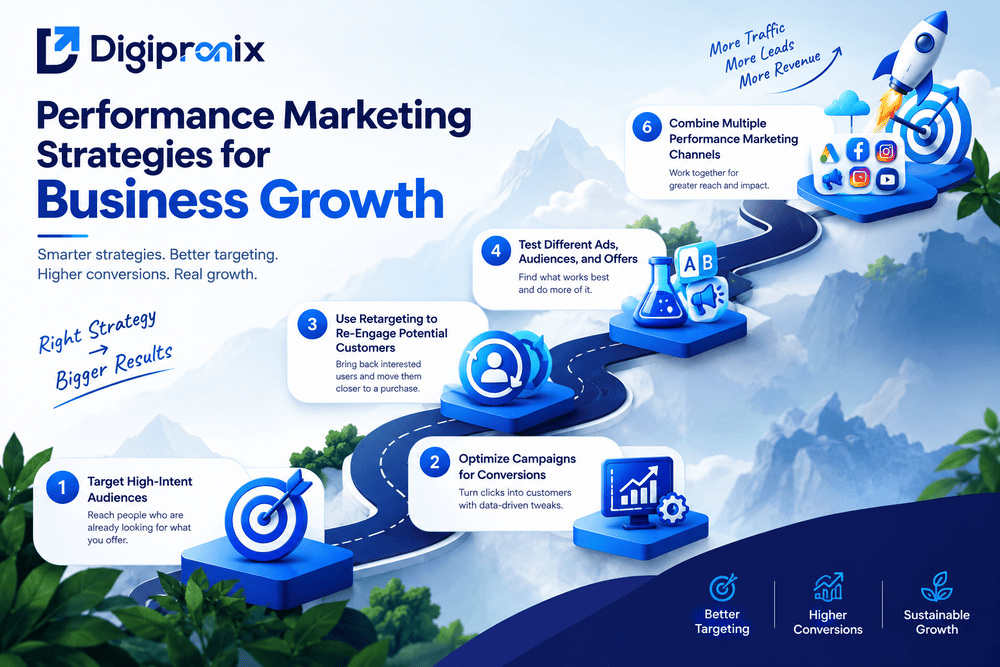
A good performance marketing strategy is not just about getting more clicks. It is about attracting the right audience, improving conversions, and putting more budget behind campaigns that contribute to real business growth.
Target High-Intent Audiences
Focus on people who are already showing interest in your product or service. Search queries, product views, repeat visits, and previous interactions can help identify users who are more likely to convert. For local businesses, Google Maps SEO can also help capture users with strong local search intent.
- Use relevant, high-intent keywords.
- Create audiences based on website activity.
- Focus on users who are closer to making a decision.
Optimize Campaigns for Conversions
More traffic does not always mean better results. Your performance marketing strategies should focus on actions that matter, such as qualified leads, purchases, bookings, or enquiries.
- Track conversions, not just clicks.
- Improve landing pages and calls to action.
- Focus on lead and customer quality.
Use Retargeting to Re-Engage Potential Customers
Not every visitor converts on the first visit. Retargeting helps bring interested users back with relevant messaging, useful information, or a stronger offer.
Test Ads, Audiences, and Offers
Regular testing helps you understand what actually works. Try different headlines, visuals, audiences, offers, and landing-page elements, then use the data to improve campaign performance.
Combine Multiple Performance Marketing Channels
Customers often interact with a business across more than one channel before converting. Combining search, social advertising, remarketing, content, and a conversion-focused website can create a stronger customer journey. For a broader approach, see our Digital Marketing Strategy for Surat Business Growth guide.
Scale What Works
Once a campaign consistently delivers quality results, increase the budget gradually rather than scaling too quickly. Monitor performance marketing metrics, conversion quality, and performance marketing ROI as you grow.
Performance Marketing Metrics and KPIs
Tracking the right performance marketing metrics helps businesses understand where their budget is going and whether campaigns are contributing to real results. The most useful KPIs include:
- Click-Through Rate (CTR): Measures how many people click an ad after seeing it. A strong CTR can indicate that your ad, message, and targeting are relevant to the audience.
- Cost Per Click (CPC): Shows the average cost of each click. A lower CPC can be useful, but it should always be considered alongside traffic quality and conversions.
- Cost Per Lead (CPL): Measures how much it costs to generate a lead. Compare CPL with lead quality and sales results to understand whether your campaigns are attracting valuable prospects.
- Cost Per Acquisition (CPA): Shows the average cost of acquiring a customer or completing a specific conversion. It is an important metric for evaluating campaign efficiency.
- Conversion Rate: Measures the percentage of users who complete a desired action, such as submitting a form, making a purchase, or booking a service.
- Return on Ad Spend (ROAS): Compares the revenue generated with the amount spent on advertising. It helps measure the efficiency of paid campaigns.
- Return on Investment (ROI): Looks at the overall financial return compared with the investment made. Tracking ROI gives a broader view of performance marketing ROI and helps guide future budget decisions.
How to Measure Performance Marketing ROI
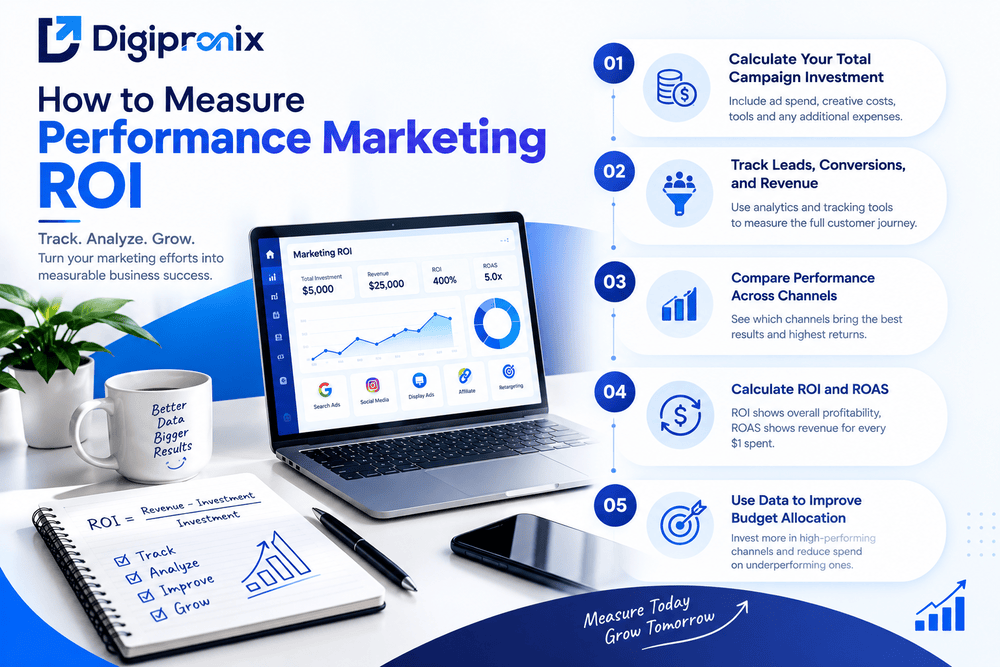
- Calculate Your Total Investment: Add ad spend along with relevant costs such as creative, tools, and agency fees.
- Track Leads, Conversions, and Revenue: Connect campaign data with analytics, CRM, ecommerce, or sales records to measure actual results.
- Compare Channel Performance: Compare campaigns, audiences, and channels to see which ones generate better-quality leads and customers.
- Calculate ROI and ROAS: ROAS measures revenue from advertising spend, while ROI looks at the broader financial return after relevant costs.
- Improve Budget Allocation: Move more budget toward campaigns that deliver valuable results and keep testing to improve performance marketing ROI.
How to Choose the Right Performance Marketing Agency
Choosing the right agency is about more than finding cheap leads or promises of guaranteed results. Look for a team that understands your business, audience, goals, and sales process before suggesting the right performance marketing strategies.
When comparing agencies, check their experience, case studies, reporting, conversion tracking, communication, and optimization process. Digipronix focuses on measurable outcomes across Google Ads, PPC, social media, and other digital marketing channels.
A good performance marketing agency should clearly explain what is working, what needs improvement, and how your budget can be optimized for better results. The goal should always be sustainable business growth, not just more clicks.
Common Performance Marketing Challenges
Even a well-planned performance marketing strategy can face challenges such as:
- Rising Ad Costs: Higher competition can increase CPC and acquisition costs.
- Tracking Issues: Inaccurate conversion data can lead to poor budget decisions.
- Weak Landing Pages: Slow or unclear pages can reduce conversions.
- Low-Quality Leads: High lead volume does not always mean high-value customers.
- Creative Fatigue: Repeated ads can cause engagement and performance to drop.
- Attribution Problems: Multiple touchpoints can make it difficult to identify what drove the conversion.
- Channel Dependence: Relying on one platform can increase campaign risk.
Use accurate tracking, regular testing, and meaningful conversion data to identify problems and improve performance marketing ROI.
Conclusion
A successful performance marketing strategy is more than running paid advertisements. It connects business goals with the right audience, channels, creative, landing pages, tracking, and optimization.
When businesses measure meaningful outcomes and use those insights to improve campaigns, performance marketing can become a repeatable part of their growth plan. The focus should remain on quality results, efficient spending, and sustainable customer acquisition.