
Custom Web Application Development: Process, Cost & Best Practices

digipronix
October 19, 2026Businesses need software that matches their workflows, goals, and customer needs. Custom web application development helps build tailored solutions that offer flexibility, improve efficiency, and adapt as business requirements grow.
From e-commerce platforms to customer portals, different types of web applications serve various business needs. The right custom web app development approach can simplify operations, enhance user experience, and connect essential tools. Businesses can explore web development services to understand how tailored digital solutions can support their requirements.
Before starting a project, businesses should understand the development process, custom web application development cost, and best practices. This guide explores these key aspects and how to choose the right custom web application development services.
What Is Custom Web Application Development?
Custom web application development is the process of building web-based software tailored to a business’s specific needs, workflows, and goals. Unlike ready-made software, custom applications offer features, designs, and integrations that match business requirements and can be accessed through a web browser.
Examples include e-commerce platforms, booking systems, customer portals, and business management dashboards. With the right custom web app development approach, businesses can streamline operations, improve user experience, and scale their applications as their needs grow.
Benefits of Custom Web Application Development
Custom web application development helps businesses build software around their specific needs, improve workflows, and manage digital operations more effectively.
- Improved Efficiency and Productivity: Automates repetitive tasks, reduces manual errors, and saves time.
- Tailored Features and Better User Experience: Customizes features and interfaces to meet employee and customer needs.
- Seamless System Integration: Connects CRM platforms, accounting software, payment gateways, and inventory systems.
- Scalability and Flexibility: Supports business growth through new features, additional users, and changing requirements.
- Greater Security and Control: Enables customized security measures, access permissions, and better data management.
- Long-Term Cost Efficiency: The initial custom web application development cost may be higher, but automation and fewer software subscriptions can reduce long-term expenses.
- Competitive Advantage: Offers unique features and smoother experiences that help businesses stand out.
Choosing reliable custom web application development services helps businesses build solutions that support their goals and future growth.
Types of Web Applications and Their Business Use Cases
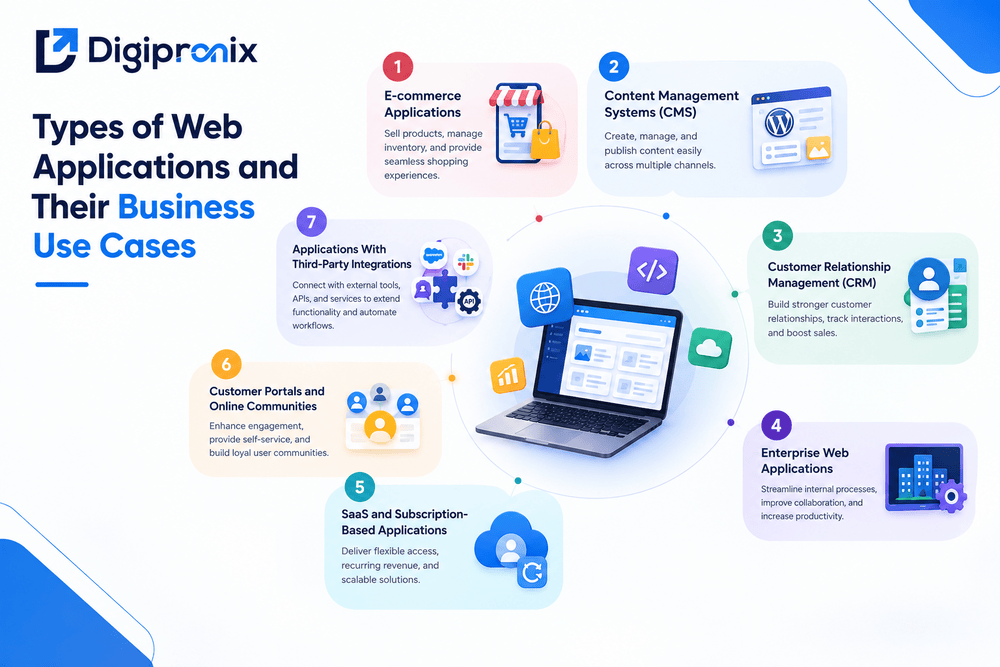
Which Web Application is Better Depends on Business Goals, Customers and Operations. In the case of custom web application development, a business can have a solution that suits all its requirements.
| Type of Web Application | Common Business Use Cases |
|---|---|
| 1. E-commerce Applications | Online stores, product catalogs, payment processing, and order tracking. |
| 2. Content Management Systems (CMS) | Creating and managing website content, blogs, news portals, and digital resources. |
| 3. Customer Relationship Management (CRM) | Managing customer data, tracking leads, and organizing sales follow-ups. |
| 4. Enterprise Web Applications | Employee management, internal reporting, inventory control, and workflow automation. |
| 5. SaaS and Subscription-Based Applications | Online accounting tools, project management platforms, and subscription software. |
| 6. Customer Portals and Online Communities | Customer accounts, appointment bookings, invoice access, support requests, and community discussions. |
| 7. Applications With Third-Party Integrations | Connecting payment gateways, CRM systems, accounting tools, and marketing platforms. |
Choosing a Type of Web Application: Your choice should be determined by business requirements, features, traffic and future expansion plans. This list of factors also influences the cost of custom web application development and services you will require.
Using the right custom web app development approach, businesses will be able to choose the most appropriate solution.
Custom Web Application Development Process: Step by Step
A successful web application starts with a clear plan and follows a structured development process. Each stage, from defining business requirements to ongoing maintenance, helps ensure the application meets user expectations, performs reliably, and supports business growth.
Step 1: Define Business Goals and Requirements
Identify the problems your application needs to solve, its target users, and the features it must include. Clear requirements help establish the project scope and avoid unnecessary development work. If your application supports customer acquisition, align its features with your broader digital marketing strategy to ensure it contributes to your business goals.
Step 2: Conduct Research and Plan the Project
Research your target audience, competitors, and existing solutions to identify opportunities. Then define the project timeline, budget, resources, and priorities before development begins.
Step 3: Choose the Right Technology Stack
Select suitable programming languages, frameworks, databases, and hosting solutions based on your application’s requirements. The right technology stack supports performance, security, scalability, and easier maintenance.
Step 4: Create UI/UX Designs and Prototypes
Design the application’s layout, navigation, and user interactions before writing code. Wireframes and prototypes help identify usability issues early and ensure the application offers a smooth experience across devices.
Step 5: Develop the Frontend and Backend
Frontend development focuses on what users see and interact with, while backend development handles business logic, data processing, and server-side functionality. In custom web application development, both components must work together to deliver a reliable application.
Step 6: Integrate Databases, APIs, and Business Systems
Connect the application to databases and relevant third-party tools, such as payment gateways, CRM platforms, or accounting software. These integrations help automate workflows and keep information consistent across systems.
Step 7: Test Functionality, Security, and Performance
Test the application to identify bugs, usability issues, security weaknesses, and performance problems. Functional, compatibility, and security testing help ensure the application works as expected before launch. For applications that track campaign results, connecting performance data can help businesses measure the effectiveness of their performance marketing strategy.
Step 8: Deploy and Launch the Application
Once testing is complete, deploy the application to a suitable hosting environment and configure the domain, server, and security settings. A planned launch helps minimize disruptions and ensures the application is ready for users.
Step 9: Monitor, Maintain, and Improve the Application
After launch, monitor performance, fix bugs, apply security updates, and collect user feedback. Regular improvements help the application remain reliable and adapt to changing business requirements.
Following these steps makes custom web app development more organized and predictable. Working with experienced custom web application development services can also help businesses manage technical decisions, project timelines, and custom web application development costs more effectively.
Custom Web Application Development Cost
The custom web application development cost depends on the application’s complexity, features, design, technology stack, and integrations. Simple applications generally cost less than complex platforms with advanced functionality and security requirements.
Other expenses include planning, development, testing, hosting, and ongoing maintenance. Before starting custom web application development, define your business goals and budget, then compare custom web application development services to find the right solution for your needs.
What Factors Affect Custom Web Application Development Cost?
The custom web application development cost depends on several key factors:
- Application Complexity: Advanced features, automation, and multiple user roles increase development costs.
- UI/UX Design: Custom interfaces, prototypes, and responsive layouts affect design expenses.
- Technology and Integrations: Frameworks, databases, and third-party integrations influence development time.
- Development Team: Team size, experience, and expertise affect overall pricing.
- Security and Testing: Data protection, compliance, and extensive testing add to the budget.
- Hosting and Maintenance: Hosting, updates, bug fixes, and ongoing support create recurring costs.
Choosing suitable custom web application development services helps businesses plan their budget and prioritize essential features.
Common Challenges in Custom Web Application Development
Although custom web application development offers flexibility, businesses may face challenges during planning, development, and launch. Identifying these issues early can help prevent delays and unnecessary expenses.
- Unclear requirements: Define project goals, features, and priorities before development begins.
- Budget overruns: Establish a realistic budget and reserve funds for unexpected requirements.
- Integration difficulties: Check compatibility with existing systems during the planning stage.
- Security risks: Follow secure coding practices and conduct regular security testing.
- Project delays: Set milestones, assign responsibilities, and communicate regularly with the development team.
Best Practices for Custom Web Application Development
1. Define Clear Requirements:
Identify your business goals, target users, and essential features to keep development focused and aligned with your needs.
2. Choose the Right Technology Stack:
Select suitable frameworks, databases, and tools to support application performance, security, and future growth.
3. Prioritize User-Friendly Design:
Create intuitive navigation and responsive layouts to deliver a smooth experience across different devices.
4. Implement Strong Security Measures:
Use secure authentication, data encryption, and access controls to protect sensitive information.
5. Test Throughout Development:
Regularly test functionality, compatibility, and performance to identify issues before launch.
6. Plan for Maintenance and Scalability:
Schedule updates, monitor performance, and improve features as business requirements evolve.
7. Choose the Right Development Partner:
Experienced custom web application development services can help you build a reliable, secure, and scalable solution that supports long-term business growth.
How to Choose the Right Web Application Development Company
Choosing the right partner affects your application’s quality, budget, and long-term performance. Consider these factors before selecting a company for custom web app development:
- Check the Portfolio: Review relevant projects and industry experience.
- Evaluate Technical Skills: Assess expertise in frameworks, APIs, databases, and security.
- Compare Pricing: Understand project scope, timelines, and additional costs.
- Check Support: Ensure reliable communication and post-launch maintenance.
Digipronix provides web development solutions tailored to business requirements, helping businesses build functional, scalable, and user-friendly applications. Choose custom web application development services that align with your goals and future growth.
Conclusion
Custom web application development enables businesses to build digital solutions around their specific workflows, customer needs, and growth objectives. Understanding the different types of web applications, development stages, and cost factors helps you plan your project more effectively.
By setting clear requirements, following development best practices, and choosing the right development partner, businesses can create applications that improve efficiency and deliver long-term value. Focus on the features that matter most, plan for ongoing maintenance, and make decisions based on your business goals and budget.