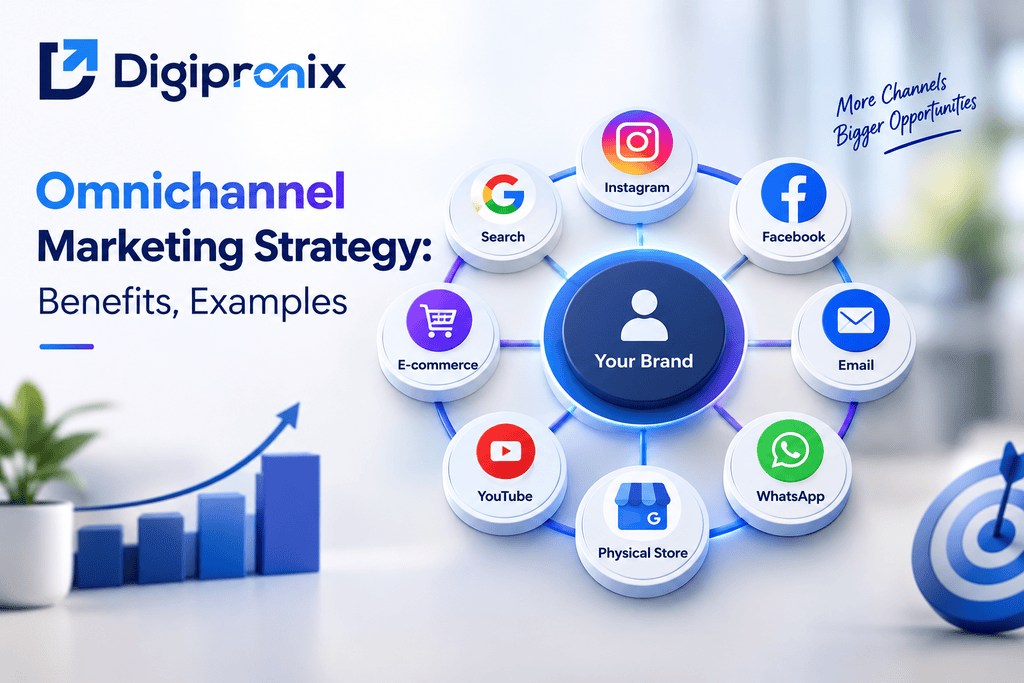
Omnichannel Marketing Strategy: Benefits, Examples

digipronix
October 27, 2026In the modern world, one can come to know about a certain brand through social media, check out the products or services available through the official site, and communicate with the company via emails or messages.
Omnichannel Marketing helps to combine all these experiences together, allowing movement from one channel to another without losing continuity. A good Omnichannel Marketing Strategy is oriented towards customer needs, links the marketing channels, and offers a more personalized experience during the purchasing process.
Businesses can gain many advantages by using the right Omnichannel Marketing strategies. In this guide, we will discuss the main benefits and examples of Omnichannel Marketing, along with how effective digital marketing solutions can help businesses connect with their audiences.
What Is Omnichannel Marketing?
Omnichannel marketing is an approach that connects different marketing channels to create a consistent customer experience. For example, a customer might discover a business on Instagram, visit its website, and later contact the team through WhatsApp before making a decision.
Unlike channels that work independently, Omnichannel Marketing focuses on connecting every customer interaction. An effective Omnichannel Marketing Strategy brings together SEO, social media, paid advertising, websites, and other platforms with consistent messaging.
By understanding customer needs and using the right omnichannel marketing strategies, businesses can improve engagement, build trust, and encourage conversions. The goal is to make every interaction feel connected, no matter which channel a customer chooses.
What Are the Benefits of Omnichannel Marketing?
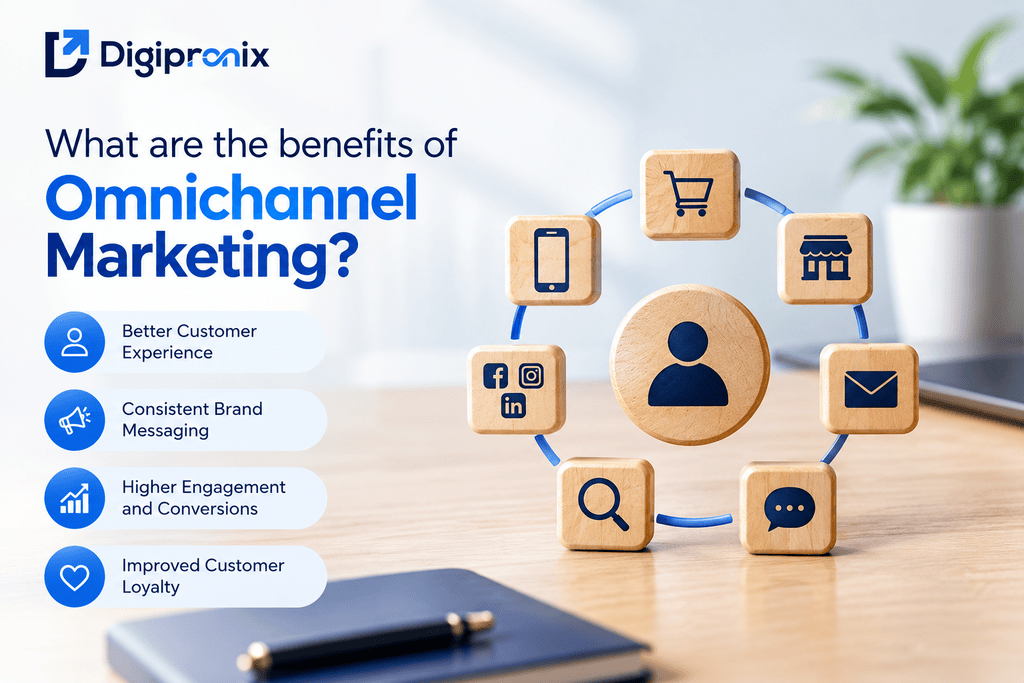
A well-planned Omnichannel Marketing Strategy helps businesses connect with customers across multiple platforms and deliver a consistent experience. Here are four key Omnichannel Marketing Benefits that can support business growth.
Better Customer Experience
Customers can move between social media, websites, email, and other channels without losing track of their journey. A connected experience helps them find information easily and interact with your business more smoothly.
Consistent Brand Messaging
Maintaining the same brand voice, message, and visual identity across platforms helps customers recognize your business. This consistency builds trust and makes your brand more memorable.
Higher Engagement and Conversions
Sharing relevant content through the right channels helps businesses connect with their target audience at the right time. Effective omnichannel marketing strategies can encourage more interactions, generate qualified leads, and improve conversion rate optimization.
Improved Customer Loyalty
Personalized communication and consistent service make customers feel valued. Over time, these positive experiences can strengthen customer relationships, encourage repeat purchases, and build long-term loyalty.
Omnichannel Marketing vs. Multichannel Marketing
Omnichannel and multichannel marketing both use multiple platforms to reach customers, but they differ in how those channels are connected.
Multichannel marketing focuses on promoting a business through separate channels, such as social media, websites, and email. Omnichannel marketing connects these channels, allowing customers to move between them with a consistent and personalized experience.
The key difference is that multichannel marketing focuses on individual platforms, while an Omnichannel Marketing Strategy prioritizes the overall customer journey. This helps businesses deliver relevant messages, improve engagement, and build stronger customer relationships.
How to Build an Effective Omnichannel Marketing Strategy
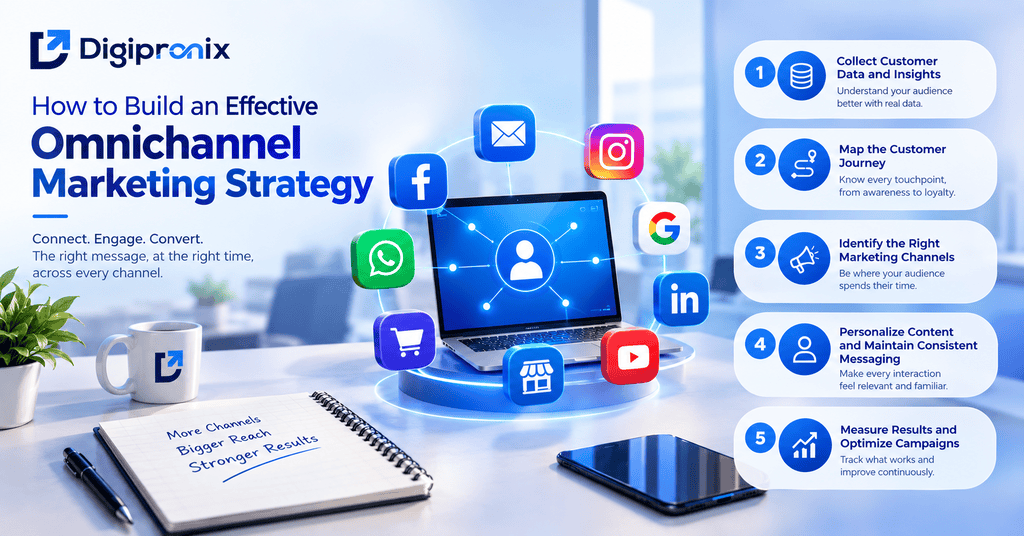
Building an effective Omnichannel Marketing Strategy requires understanding your customers, choosing the right platforms, and ensuring every channel works together. Follow these five steps to create a connected customer experience and support business growth.
1. Collect Customer Data and Insights
Start by understanding your customers’ needs, preferences, and online behavior. Use analytics and customer feedback to identify what works and where improvements are needed.
- Review website traffic and social media engagement.
- Analyze customer inquiries, feedback, and buying patterns.
- Identify common customer needs and challenges.
2. Map the Customer Journey
Understand how customers discover your brand, explore your services, and make purchasing decisions. Mapping their journey helps you identify gaps and improve each interaction.
- Identify key customer touchpoints.
- Understand where customers lose interest or need support.
- Connect interactions across different marketing channels.
3. Identify the Right Marketing Channels
Choose platforms that match your audience’s preferences and business goals. The right combination of channels helps you reach potential customers more effectively. For businesses targeting local customers, Google Maps SEO can help improve visibility in local search results.
- Use SEO to improve visibility in search results.
- Leverage social media and paid ads to reach relevant audiences.
- Connect your website, email, and other customer touchpoints.
4. Personalize Content and Maintain Consistent Messaging
Deliver relevant content based on customer interests while maintaining a consistent brand voice across platforms. This helps customers recognize your business and builds trust.
- Adapt content to suit each platform.
- Keep your brand tone, visuals, and offers consistent.
- Personalize messages based on customer behavior and interests.
5. Measure Results and Optimize Campaigns
Regularly evaluate your omnichannel marketing strategies to understand which channels contribute to engagement, leads, and conversions. Use these insights to improve future campaigns. A well-defined performance marketing strategy can help businesses evaluate campaign results and make better marketing decisions.
- Track website traffic, engagement, leads, and conversions.
- Compare performance across different channels.
- Test new approaches and adjust campaigns based on results.
Omnichannel Marketing Examples for Businesses
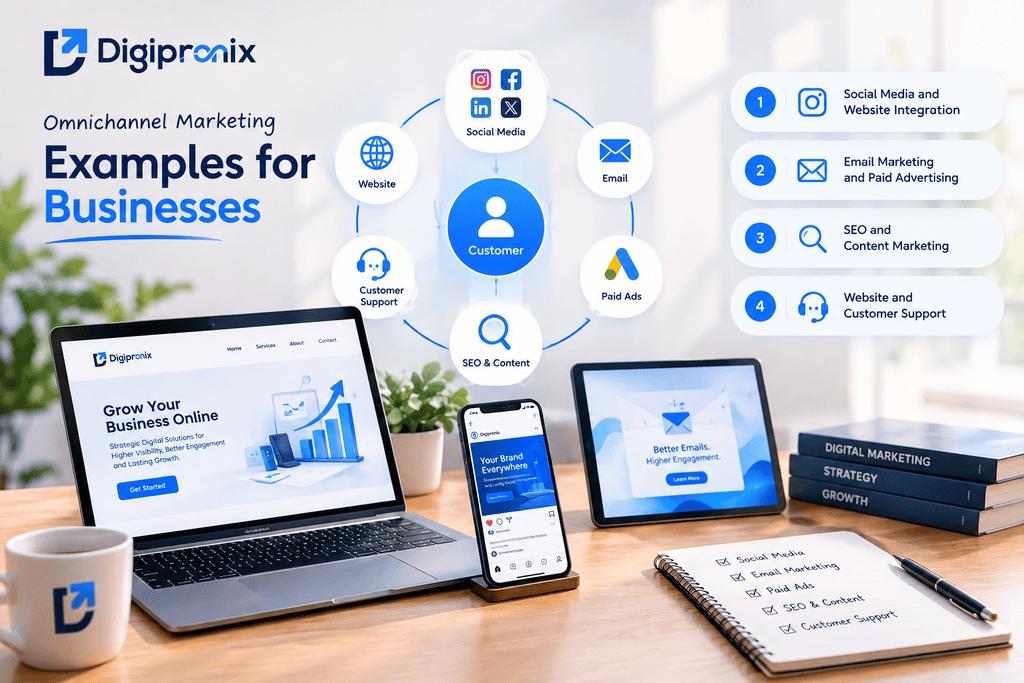
Businesses can use omnichannel marketing to connect customer interactions across different platforms. These examples show how channels can work together to create a consistent and personalized experience.
1. Social Media and Website Integration
A customer discovers a business through an Instagram post and visits its website to explore services. Relevant website content and follow-up ads can help the customer learn more and take the next step. A consistent social media marketing strategy can help businesses attract potential customers and guide interested users to their websites.
2. Email Marketing and Paid Advertising
A business promotes an offer through social media ads and invites interested users to subscribe to its email list. Follow-up emails can share useful information, answer common questions, and encourage potential customers to enquire. Understanding Google Ads vs Facebook Ads can help businesses choose suitable advertising platforms based on their goals and target audience.
3. SEO and Content Marketing
A customer finds a business through Google search, reads a helpful blog, and visits a related service page. Connecting SEO, useful content, and clear calls to action helps guide visitors towards an enquiry or purchase.
4. Website and Customer Support
Customers may explore services on a website before contacting the business through WhatsApp, email, or live chat. Consistent information and helpful support across these channels create a smoother experience.
These Omnichannel Marketing Examples show how businesses can connect SEO, social media, paid ads, websites, and customer support to improve engagement and generate more opportunities.
Omnichannel Marketing Trends to Watch
Technology and customer behavior continue to shape how businesses connect with their audiences. These emerging trends can help improve your Omnichannel Marketing Strategy and create more connected customer experiences.
- AI-Powered Personalization: Use AI to understand customer preferences and deliver more relevant content, recommendations, and messages across channels. As AI changes how customers discover information, understanding AI SEO can help businesses adapt their search visibility strategies.
- Online and Offline Integration: Connect digital marketing with in-person experiences so customers receive consistent information wherever they interact with your business.
- Marketing Automation: Automate follow-up emails, customer responses, and routine communications to save time and maintain engagement.
- Data-Driven Decisions: Analyze website traffic, campaign performance, and customer interactions to identify successful channels and improve marketing efforts.
- Cross-Device Experiences: Ensure your website, content, and messaging work consistently across smartphones, tablets, and computers.
Keeping up with these omnichannel marketing strategies can help businesses adapt to changing customer expectations, improve engagement, and build stronger customer relationships.
Conclusion
An effective Omnichannel Marketing Strategy helps businesses create consistent customer experiences across platforms such as search engines, social media, websites, email, and paid advertising. When these channels work together, businesses can improve engagement, build customer trust, and create more opportunities for conversions.
To achieve better results, understand your customers’ journey, choose the right marketing channels, and regularly track campaign performance. By refining your omnichannel marketing strategies based on customer behavior and data, you can deliver more relevant experiences and support long-term business growth.
For businesses looking to connect their digital channels and strengthen their online presence, Digipronix offers tailored SEO services to help improve search visibility and support business growth. The right strategy can help turn disconnected interactions into a more connected customer journey.