
AEO vs. GEO: Differences, Benefits & Strategies Explained

digipronix
November 18, 2026Search is evolving beyond traditional search engine results, and AI-powered platforms are changing how people find information.
This shift has made Answer Engine Optimization (AEO) and Generative Engine Optimization (GEO) important parts of modern search strategies, alongside traditional SEO practices.
Although both aim to improve online visibility, the difference between AEO and GEO lies in how they help content appear in search results and AI-generated answers.
Understanding the benefits of AEO and GEO can help businesses build a smarter search strategy and reach their target audience more effectively.
In this guide, we’ll explore GEO vs AEO, their key differences, benefits, and practical optimization strategies.
What Is Answer Engine Optimization (AEO)?
Answer Engine Optimization (AEO) is the process of optimizing website content to provide clear and direct answers to users’ questions.
Its main goal is to help content appear in answer-focused search features such as Google’s Featured Snippets, People Also Ask (PAA), and voice search results.
How does AEO work?
AEO focuses on making information easy for search engines and answer platforms to understand and extract through clear content structure and effective on-page SEO techniques.
Key AEO practices include:
- Question-based headings: Use headings that match common user searches.
- Direct answers: Provide clear and concise answers immediately after headings.
- Structured content: Organize information using headings, bullet points, and FAQs.
- Schema markup: Use relevant structured data to help search engines understand your content.
- Helpful information: Answer users’ questions accurately without unnecessary details.
Example: When someone searches “What is SEO?”, Google may display a short explanation from a relevant webpage in its Featured Snippet. AEO helps make your content suitable for these answer-based results.
What Is Generative Engine Optimization (GEO)?
Generative Engine Optimization (GEO) is the process of improving website content so AI-powered platforms can understand, reference, and potentially cite it in their generated responses.
Platforms such as ChatGPT, Google AI Overviews, and Perplexity generate answers using information from multiple sources.
GEO focuses on making your content informative, credible, and valuable enough to be considered by these AI systems through effective AI SEO practices.
How does GEO work?
GEO focuses on strengthening content quality, topical relevance, and brand credibility.
Key GEO practices include:
- In-depth content: Cover topics with useful explanations and relevant details.
- Original insights: Include unique perspectives, examples, and research.
- Reliable sources: Support important information with credible references.
- Topical authority: Publish relevant content around your main subject areas.
- Clear content structure: Use descriptive headings, lists, and organized information.
- Brand consistency: Maintain accurate and consistent business information across online platforms.
Example: When someone asks ChatGPT or Perplexity to recommend digital marketing strategies, these platforms may reference information from multiple websites.
GEO helps improve the chances of your content or brand being included in relevant AI-generated responses.
AEO vs. GEO: Key Differences
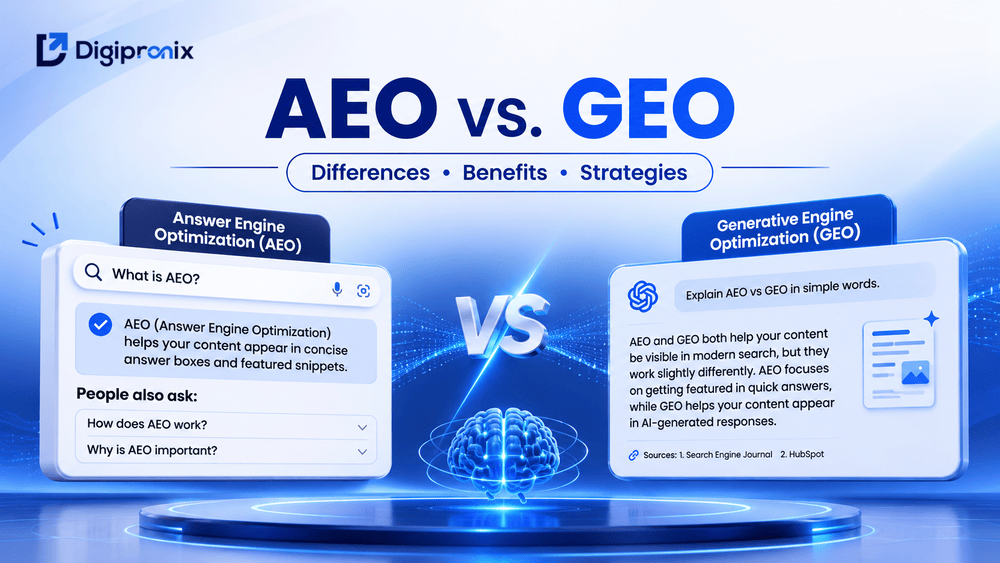
Answer Engine Optimization (AEO) and Generative Engine Optimization (GEO) both aim to improve content visibility, but they work differently.
AEO focuses on making website content easy to extract as direct answers, while GEO focuses on helping AI platforms understand, reference, and potentially cite relevant content in generated responses.
The following table highlights the key differences between AEO and GEO:
| Comparison Factor | AEO (Answer Engine Optimization) | GEO (Generative Engine Optimization) |
|---|---|---|
| Main Objective | Make content appear as direct answers to users’ questions. | Improve the chances of content being referenced in AI-generated responses. |
| Target Platforms | Google Featured Snippets, People Also Ask, Bing answer results, and voice assistants. | ChatGPT, Google AI Overviews, Gemini, and Perplexity. |
| Content Structure | Uses concise answers, question-based headings, FAQs, and bullet points. | Uses detailed explanations, original insights, and context-rich information. |
| Optimization Strategy | Focuses on answer formatting, relevant keywords, and structured data. | Focuses on topical authority, content quality, originality, and credible information. |
| Search Intent | Targets specific questions that require quick and direct answers. | Addresses broader, conversational, and complex queries. |
| Content Approach | Provides clear information that answer engines can easily identify and extract. | Provides useful information that generative AI systems can understand and reference. |
| Performance Measurement | Tracks featured snippet visibility, impressions, clicks, and answer-based search appearances. | Tracks AI citations, brand mentions, and visibility in generative search responses. |
| Ideal Content Types | FAQs, definitions, step-by-step guides, and short explanations. | Comprehensive guides, research-based articles, industry insights, and expert content. |
While AEO helps your content become a useful source for direct answers, GEO focuses on improving its visibility in AI-generated responses.
Combining both approaches helps businesses adapt their content strategy to changing search experiences.
Benefits of AEO and GEO
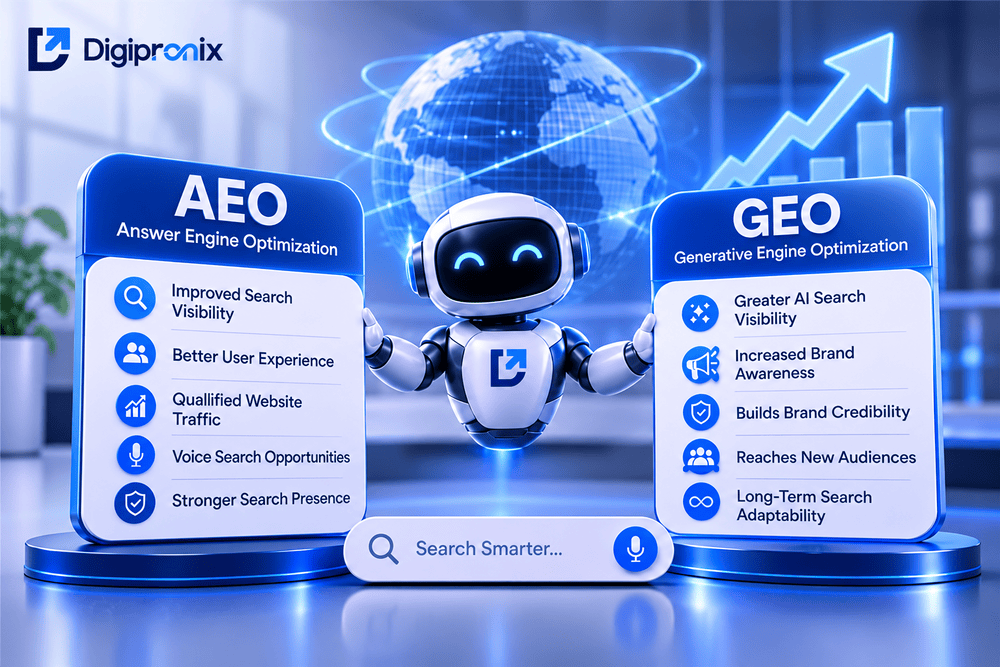
Both Answer Engine Optimization (AEO) and Generative Engine Optimization (GEO) help businesses improve their online visibility, but each offers different advantages.
Understanding the benefits of AEO and GEO can help businesses build a stronger search strategy and reach audiences across traditional and AI-powered search platforms.
Benefits of AEO
- Improved Search Visibility: Increases opportunities to appear in featured snippets, People Also Ask, and other answer-based search results.
- Better User Experience: Provides clear and direct answers, helping users find relevant information quickly.
- Qualified Website Traffic: Attracts users searching for specific information, products, or services.
- Voice Search Opportunities: Makes content easier for voice assistants to identify and deliver as answers.
- Stronger Search Presence: Extends traditional SEO efforts by making content suitable for answer-focused search experiences.
Benefits of GEO
- Greater AI Search Visibility: Improves the chances of your content being referenced in AI-generated responses.
- Increased Brand Awareness: Helps audiences discover your brand through platforms such as ChatGPT, Gemini, and Perplexity.
- Builds Brand Credibility: High-quality, reliable content can strengthen your brand’s reputation as a useful information source.
- Reaches New Audiences: Creates additional discovery opportunities beyond traditional search engine results.
- Long-Term Search Adaptability: Helps businesses prepare their content strategies for the growing use of generative AI in information discovery.
Why combine AEO and GEO?
AEO helps your content provide direct answers, while GEO focuses on making your brand and information relevant to AI-generated responses.
Using both approaches can support broader search visibility and help businesses stay discoverable as search behaviour evolves.
AEO vs. GEO: Which Strategy Should Businesses Choose?
Choosing between AEO and GEO depends on your business goals, target audience, and how customers search for information. Both approaches improve content visibility, but they serve different purposes.
AEO is a good choice when your business wants to:
- Appear in featured snippets and People Also Ask results.
- Answer common customer questions directly.
- Improve visibility for specific search queries.
- Make website content easier to understand and extract.
GEO is a good choice when your business wants to:
- Improve its chances of appearing in AI-generated responses.
- Build brand awareness across generative AI platforms.
- Establish credibility through informative and reliable content.
- Reach audiences using conversational and complex search queries.
Businesses don’t need to choose between AEO and GEO, as both work together to improve search visibility. AEO focuses on direct answers, while GEO strengthens your presence in AI-generated responses.
Combining both approaches with traditional SEO helps businesses adapt their content strategy to changing search experiences, while understanding the role of organic search growth in long-term visibility.
It also prepares your content for changing search behaviour and AI-powered discovery.
How to Build an Effective AEO and GEO Strategy
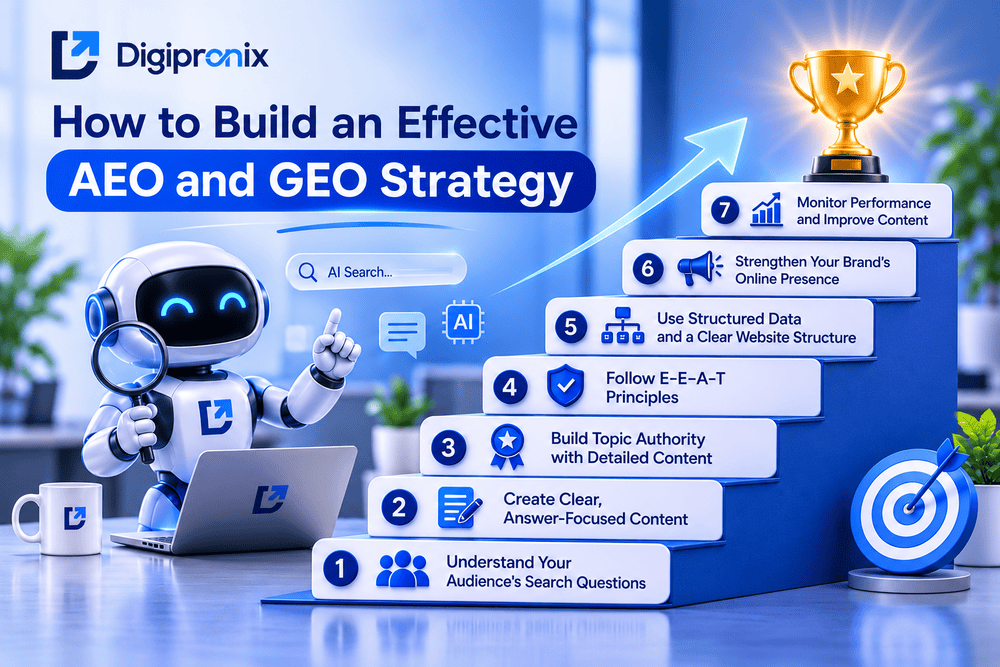
An effective AEO and GEO strategy combines helpful content, proven expertise, and clear information to improve visibility across search platforms and AI-powered tools.
Here are some practical ways to get started:
1. Understand Your Audience’s Search Questions
Research the questions your target audience asks about your products, services, and industry. Use Google Search suggestions, People Also Ask, customer enquiries, and free SEO tools to identify relevant topics and understand search behaviour.
2. Create Clear, Answer-Focused Content
Use question-based headings and provide direct answers near the beginning of each section. Include relevant FAQs, bullet points, and comparison tables to make information easier to find and understand. This supports your AEO optimization efforts.
3. Build Topic Authority with Detailed Content
Cover important subjects in depth rather than publishing disconnected articles. Create related content around your main topics, include original insights, and address different user questions. This helps strengthen topical relevance for GEO.
4. Follow E-E-A-T Principles
Demonstrate experience, expertise, authoritativeness, and trustworthiness through accurate information, expert insights, author details, and reliable references. Keep your content updated and support important claims with credible sources.
5. Use Structured Data and a Clear Website Structure
Organize pages with descriptive headings, logical sections, internal links, and relevant schema markup. Structured data can help search engines understand your content, while a clear structure improves accessibility for users and search systems.
6. Strengthen Your Brand’s Online Presence
Maintain consistent business information across your website, business profiles, directories, and relevant industry platforms. Build genuine brand mentions, earn quality backlinks, and publish useful content that establishes your business as a credible source.
7. Monitor Performance and Improve Content
Track organic visibility, search impressions, clicks, and featured snippet performance for AEO. For GEO, periodically check relevant AI platforms for brand mentions and content citations. Use these insights to identify content gaps and improve your strategy.
By combining these practices, businesses can build a stronger search presence and improve their chances of being discovered through both traditional search features and AI-generated responses.
Conclusion
Search is evolving, and businesses need to optimize their content for both traditional search engines and AI-powered platforms. AEO helps deliver direct answers, while GEO improves visibility in AI-generated responses.
Combining AEO, GEO, and traditional SEO helps businesses strengthen online visibility, build brand credibility, and reach potential customers. Each approach supports a different part of the modern search experience.
By creating helpful, trustworthy, and well-structured content, businesses can adapt to changing search behaviour. The goal is to make your brand easier to discover, understand, and trust.