
10 Lead Generation Strategies to Attract High-Quality Leads

digipronix
November 2, 2026In today’s competitive digital marketplace, attracting potential customers is not enough. Businesses need to reach the right audience, build trust, and generate genuine interest in their products or services.
Lead generation is the process of attracting potential customers and encouraging them to share their contact information or express interest in your offerings. It helps businesses build a sales pipeline and connect with prospects who are more likely to become paying customers.
An effective lead generation strategy uses different marketing channels, such as SEO services, content marketing, social media, email marketing, and paid advertising, to attract qualified prospects.
In this guide, we’ll explore 10 effective lead generation strategies to help businesses attract high-quality leads, connect with potential customers, and improve conversions.
What Is Lead Generation?
Lead generation is the process of attracting potential customers who show interest in your business, products, or services and encouraging them to share their contact information.
A lead is someone who expresses interest by filling out a contact form, subscribing to a newsletter, downloading a resource, or requesting more information.
Businesses use different lead generation techniques to attract potential customers through channels such as:
- Blog posts and content marketing
- Social media platforms
- Email marketing campaigns
- Landing pages and contact forms
- Webinars and free resources
- Paid advertising campaigns
The goal of effective lead generation strategies is to attract qualified prospects, build trust, and turn their interest into sales opportunities.
Why Is Attracting High-Quality Leads Important?
Attracting high-quality leads helps businesses focus on potential customers who are genuinely interested in their products or services. These prospects are more likely to make a purchase, helping improve conversion rates and create better sales opportunities.
Effective lead generation strategies also help reduce wasted marketing costs, build stronger customer relationships, and support business growth. Focusing on lead quality rather than just lead quantity makes marketing efforts more productive.
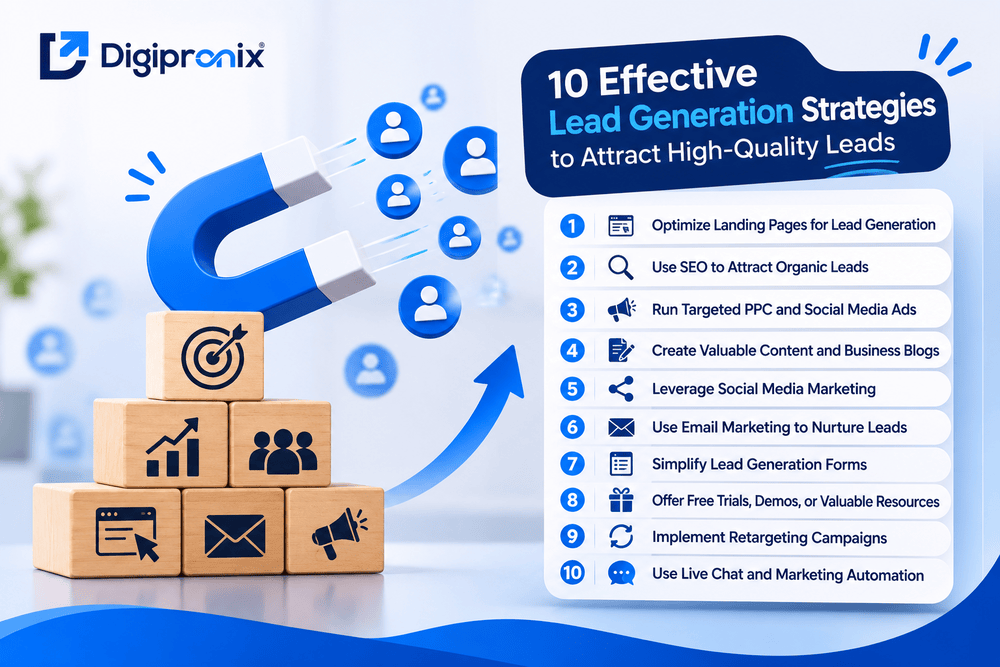
10 Effective Lead Generation Strategies to Attract High-Quality Leads
Attracting high-quality leads requires more than just promoting your products or services. Businesses need to choose the right marketing channels, understand their target audience, and create opportunities for potential customers to connect with them.
Here are 10 effective lead generation strategies that can help businesses attract qualified prospects, improve engagement, and generate better sales opportunities.
1. Optimize Landing Pages for Lead Generation
Landing pages help turn website visitors into potential leads by encouraging them to take a specific action, such as requesting a quote, booking a consultation, or signing up for a service.
To make your landing pages more effective:
- Write clear and compelling headlines.
- Highlight the benefits of your products or services.
- Add customer testimonials and reviews.
- Include a visible call-to-action (CTA).
- Keep the design simple and mobile-friendly.
A well-designed landing page makes it easier for visitors to share their information and become potential customers.
To improve landing page performance and turn more visitors into enquiries, explore these conversion rate optimization strategies.
2. Use SEO to Attract Organic Leads
Search engine optimization (SEO) helps businesses attract potential customers who are actively searching for related products or services. It is one of the most effective online lead generation strategies for building long-term organic traffic.
To generate leads through SEO:
- Target relevant and high-intent keywords.
- Create helpful, search-friendly blog content.
- Optimize service and landing pages.
- Improve website speed and user experience.
- Use clear CTAs to encourage inquiries.
By targeting the right search terms, businesses can attract visitors who are more likely to become qualified leads.
You can also explore these free SEO tools to research keywords, analyze website performance, and identify optimization opportunities.
3. Run Targeted PPC and Social Media Ads
Paid advertising helps businesses reach their target audience and generate leads through platforms such as Google Ads, Facebook, Instagram, and LinkedIn.
Some effective ways to use paid campaigns include:
- Target audiences based on location, interests, and demographics.
- Use Google Search Ads to reach people actively looking for services.
- Run Meta lead generation campaigns to collect inquiries.
- Create LinkedIn campaigns for B2B audiences.
- Test different ad creatives, headlines, and CTAs.
Regular campaign monitoring helps identify which ads generate quality leads and improve advertising performance.
For a broader approach to planning campaigns and tracking leads, read our guide to performance marketing strategy.
4. Create Valuable Content and Business Blogs
Content marketing helps attract potential customers by providing useful information and answering their questions. Blogs, guides, and case studies can build trust and encourage visitors to explore your offerings.
Consider creating:
- Educational blog posts
- Industry guides and how-to articles
- Customer success stories and case studies
- Informative videos and infographics
- Downloadable ebooks and resources
Focus on topics that address your audience’s problems and provide relevant solutions. This approach helps attract interested prospects and supports your lead generation strategies.
5. Leverage Social Media Marketing
Social media platforms help businesses connect with potential customers, increase brand awareness, and generate inquiries through regular engagement.
To generate leads through social media:
- Share informative and engaging posts.
- Publish reels, videos, and customer testimonials.
- Use relevant hashtags and targeted content.
- Add website and contact links to your profiles.
- Respond to comments and direct messages.
Choose platforms where your target audience is most active. Consistent engagement can help build trust and generate new business opportunities.
For more practical ideas, explore our guide to social media marketing for small businesses.
6. Use Email Marketing to Nurture Leads
Email marketing helps businesses maintain communication with potential customers and guide them through the buying journey. It is particularly useful for nurturing leads who have shown interest but are not ready to purchase.
Some effective email marketing practices include:
- Send personalized email campaigns.
- Share useful tips, guides, and updates.
- Offer relevant discounts or promotions.
- Follow up with interested prospects.
- Automate emails based on user actions.
Consistent and relevant communication helps build relationships and encourages potential customers to take the next step.
Connecting email, social media, websites, and other customer touchpoints through an omnichannel marketing strategy can create a more consistent customer journey.
7. Simplify Lead Generation Forms
Lead generation forms allow website visitors to share their contact details when requesting information, booking consultations, or downloading resources.
Follow these practices to improve form submissions:
- Ask only for essential information.
- Use clear field labels.
- Add a simple and visible CTA button.
- Include a privacy statement.
- Make forms easy to complete on mobile devices.
Short and user-friendly forms reduce friction and make it easier for potential customers to contact your business.
8. Offer Free Trials, Demos, or Valuable Resources
Offering something valuable in exchange for contact information can encourage potential customers to engage with your business.
Depending on your products or services, consider offering:
- Free product trials
- Service demonstrations
- Free consultations
- Downloadable guides and ebooks
- Free audits or assessments
These offers help prospects understand the value of your business while giving you an opportunity to connect with interested customers.
9. Implement Retargeting Campaigns
Not every website visitor becomes a lead during their first visit. Retargeting campaigns help businesses reconnect with people who have previously visited their website or interacted with their advertisements.
You can improve retargeting campaigns by:
- Showing ads to previous website visitors.
- Promoting services they previously explored.
- Sharing customer reviews and testimonials.
- Offering relevant discounts or incentives.
- Testing different ad messages and creatives.
Retargeting helps bring interested visitors back to your website and encourages them to complete an inquiry or other conversion action.
10. Use Live Chat and Marketing Automation
Live chat and marketing automation help businesses engage with website visitors, answer questions, and manage incoming inquiries more efficiently.
Some useful approaches include:
- Add live chat to answer visitor questions.
- Use chatbots to collect basic contact information.
- Automate follow-up emails after form submissions.
- Send personalized messages based on user interests.
- Track lead interactions to understand their needs.
These tools help businesses respond faster, nurture prospects, and support better lead conversion strategies.
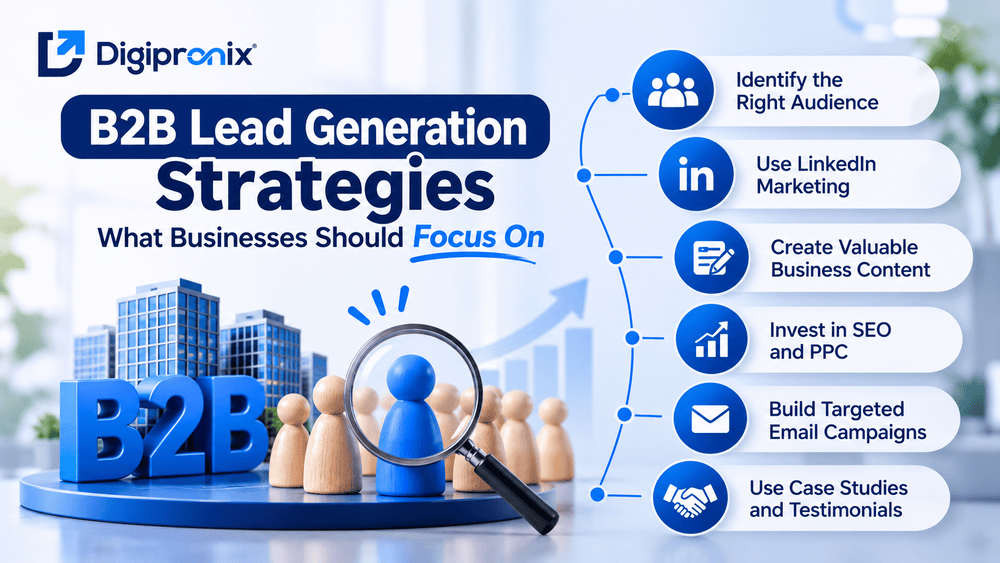
B2B Lead Generation Strategies: What Businesses Should Focus On
B2B lead generation focuses on attracting businesses and decision-makers who may need your products or services. Unlike B2C marketing, B2B purchasing decisions often involve longer sales cycles, multiple stakeholders, and careful evaluation.
Businesses can improve their B2B lead generation strategies by focusing on:
- Identify the Right Audience: Define your ideal customer profile, target industries, company size, and decision-makers.
- Use LinkedIn Marketing: Connect with business owners, managers, and professionals through relevant content and targeted campaigns.
- Create Valuable Business Content: Publish industry insights, case studies, guides, and blogs that address your audience’s challenges.
- Invest in SEO and PPC: Target business-related search terms to reach companies actively looking for your solutions.
- Build Targeted Email Campaigns: Share relevant information and follow up with prospects based on their interests.
- Use Case Studies and Testimonials: Demonstrate real results to build trust and help potential clients evaluate your services.
A successful B2B approach prioritizes lead quality over quantity. By reaching the right decision-makers, providing useful information, and building long-term relationships, businesses can generate qualified leads and improve conversions.
How to Measure Lead Generation Success
Measuring lead generation performance helps businesses understand which marketing activities are working and where improvements are needed. Tracking the right metrics also helps manage budgets, improve lead quality, and make better decisions.
Key metrics to track include:
- Conversion Rate: Measures the percentage of leads who complete a desired action, such as submitting a form or making a purchase.
- Cost Per Lead (CPL): Shows how much your business spends to generate each lead.
- Lead Quality: Evaluates whether generated leads match your target audience and are likely to become customers.
- Return on Investment (ROI): Compares the revenue generated with the total marketing investment.
By monitoring these metrics, businesses can improve lead generation strategies, identify effective online lead-generation techniques, and make better decisions to support lead conversion.
Conclusion
Generating high-quality leads requires the right combination of strategy, valuable content, and consistent marketing efforts. From SEO and PPC to social media and email marketing, businesses should choose lead generation techniques that match their target audience and business goals.
By implementing effective lead generation strategies, focusing on qualified prospects, and tracking performance, businesses can improve lead conversion and build a stronger sales pipeline. The key is to attract the right audience, build trust, and turn potential customers into long-term business relationships.