
WhatsApp Marketing: A Complete Guide to Strategies, Benefits & Business Growth

digipronix
November 4, 2026WhatsApp has become more than just a messaging app. Businesses now use it to connect with customers, answer questions, share product updates, and generate sales. Its familiar interface makes communication easier and more personal than many traditional marketing channels.
With the right WhatsApp Marketing Strategy, businesses can build stronger customer relationships, promote their products, and provide faster support. When combined with effective social media marketing, WhatsApp can become a useful part of your digital marketing efforts, whether you run a small business or a growing company.
What Is WhatsApp Marketing and How Does It Work?
WhatsApp Marketing is a digital marketing method that helps businesses connect with customers through WhatsApp. It allows brands to promote products, share updates, generate leads, and provide customer support through direct conversations.
Businesses use the WhatsApp Business App or Platform to send personalized messages, share product catalogs, answer enquiries, and automate replies.
With the right WhatsApp Marketing Strategy, businesses can strengthen their overall digital marketing strategy, reach interested customers, improve engagement, and build long-term relationships.
WhatsApp Business App vs. WhatsApp Business Platform (API)
Before starting WhatsApp Business Marketing, it is important to understand the two main options available: the WhatsApp Business App and the WhatsApp Business Platform (API). Both help businesses communicate with customers, but they serve different needs.
WhatsApp Business App
The WhatsApp Business App is designed mainly for small businesses and individual business owners. It provides basic tools to manage customer conversations and share business information without requiring technical knowledge.
Businesses can create a profile, display products through a catalog, set automated greeting messages, and organize chats using labels. It works well for businesses that handle customer conversations themselves.
WhatsApp Business Platform (API)
The WhatsApp Business Platform, commonly known as the WhatsApp Business API, is designed for medium-sized and larger businesses that need to manage communication at scale.
It supports integrations with CRM systems, automated messaging workflows, chatbots, and multiple customer service agents through connected software. Businesses can also use it to manage notifications and marketing conversations more efficiently.
Unlike the Business App, the API does not provide a standalone chat interface. Businesses generally access it through an approved platform or integration. Pricing may include Meta messaging charges and additional provider fees.
Which Option Is Right for Your Business?
Choose the WhatsApp Business App if you manage a smaller number of customer conversations and need simple communication tools. The API is more suitable when your business needs automation, team access, CRM integration, or large-scale messaging.
WhatsApp Business Features for Marketing
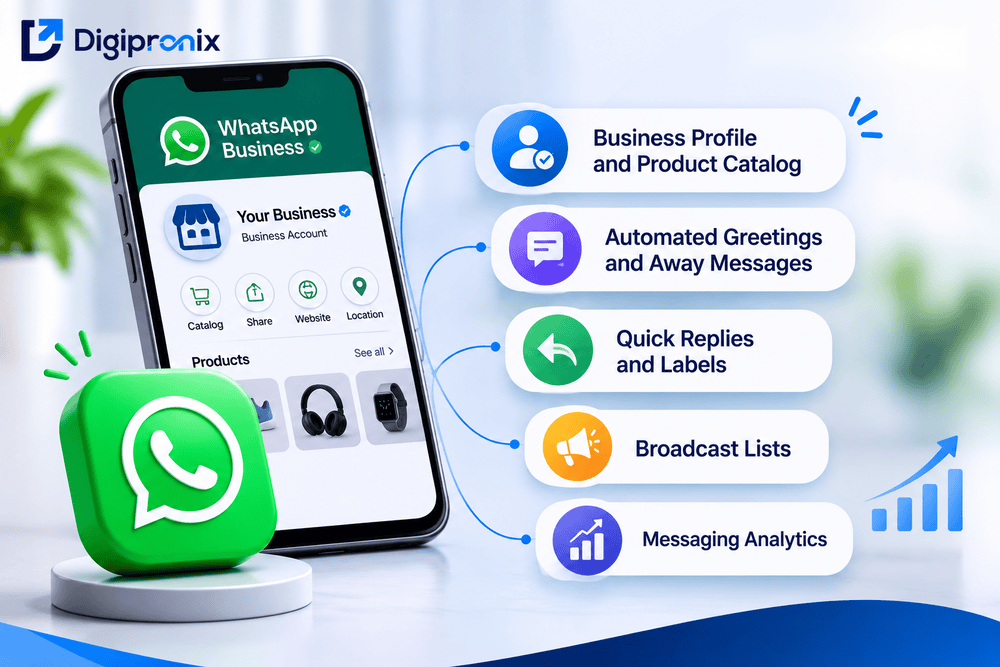
WhatsApp offers several features that help businesses manage customer communication and support their marketing activities.
Business Profile and Product Catalog
A business profile allows you to display important details such as your business name, description, address, website, and working hours. The product catalog helps customers browse products or services directly within WhatsApp.
These features make it easier for potential customers to understand what your business offers before starting a conversation.
Automated Greetings and Away Messages
Greeting messages can welcome customers when they contact your business for the first time. Away messages help inform customers when your team is unavailable.
These simple automations make communication more organized and help customers know what to expect.
Quick Replies and Labels
Quick replies allow businesses to save frequently used answers for common questions about pricing, services, delivery, or appointments.
Labels help organize conversations based on customer requirements, such as new enquiries, pending payments, or completed orders. Together, these features make everyday communication easier to manage.
Broadcast Lists
Broadcast lists allow businesses to send a message to multiple contacts individually rather than creating a group conversation. They can be useful for sharing announcements, product updates, and special offers.
Businesses should send messages only to customers who have agreed to receive them. Delivery through the Business App can also depend on recipients having saved the business number.
Messaging Analytics
The WhatsApp Business Platform provides messaging insights that help businesses understand campaign performance. Depending on the tools used, businesses can monitor message delivery, reads, responses, and other relevant activity.
These insights help identify what is working and where communication can improve.
WhatsApp Marketing Benefits for Businesses

WhatsApp can support several business goals, from customer engagement to sales and retention. Here are some important WhatsApp Marketing Benefits.
Direct and Personal Customer Communication
WhatsApp gives businesses a direct way to communicate with customers through a familiar messaging platform. Instead of relying only on emails or website forms, customers can ask questions and receive information through a conversation.
Combining WhatsApp with email, websites, and social media creates a connected omnichannel marketing strategy that helps customers interact with a business across different platforms.
Better Customer Engagement
Businesses can share useful updates, product information, offers, and announcements. Personalized messages and relevant content can encourage customers to interact with the brand and learn more about its products or services.
Faster Customer Support
Customers often want quick answers before making a purchase. WhatsApp allows businesses to respond to questions, share order updates, and guide customers through common issues.
Automated replies and team-based inboxes can further improve response management.
Increased Sales Opportunities
Businesses can share product catalogs, recommend relevant products, answer purchase-related questions, and apply effective lead generation strategies to turn interested customers into potential buyers. This can help customers move from initial interest to a buying decision with fewer communication steps.
Cost-Effective Marketing
WhatsApp can be an affordable communication channel, particularly for small businesses already using the Business App. However, API messaging and third-party platforms may involve additional charges.
Improved Customer Retention
Regular updates, helpful support, and personalized follow-ups help businesses stay connected with existing customers. When customers receive relevant communication and good service, they have more reasons to return.
How to Create an Effective WhatsApp Marketing Strategy
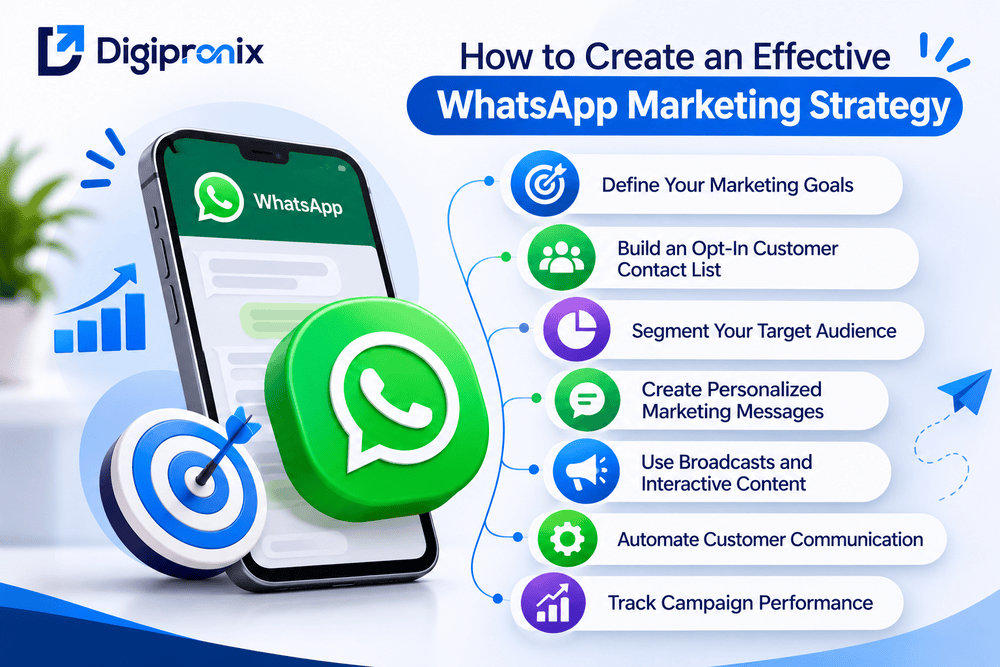
A successful WhatsApp Marketing Strategy requires more than sending promotional messages. Businesses need to understand their audience, share relevant content, and measure results.
Define Your Marketing Goals
Start by deciding what you want to achieve. Your goals might include generating leads, increasing product enquiries, improving customer support, promoting new products, or encouraging repeat purchases.
Clear goals help you choose the right messaging approach.
Build an Opt-In Customer Contact List
Collect WhatsApp contacts through website forms, checkout pages, social media campaigns, or in-store interactions. Clearly explain what kind of messages customers can expect and obtain their consent before sending marketing communications.
Avoid purchased contact lists and unsolicited promotions. Always provide a simple way for customers to stop receiving messages.
Segment Your Target Audience
Not every customer has the same needs. Divide your audience into relevant groups based on interests, previous purchases, location, or enquiry history.
For example, a clothing store can send different product updates to customers interested in men’s wear and women’s wear. Relevant messages are more useful than sending the same promotion to everyone.
Create Personalized Marketing Messages
Use clear, conversational language instead of messages that sound like advertisements. Include useful information, a relevant offer, or a clear next step.
Personalization can include a customer’s name, product preferences, or previous interaction, provided the information is used appropriately.
Use Broadcasts and Interactive Content
Share product launches, service updates, event invitations, and limited-time offers with opted-in customers. You can also use images, videos, and other supported interactive message formats to make communication more engaging.
Keep messages focused and avoid sending too frequently.
Automate Customer Communication
Automation can help businesses handle common questions, welcome new enquiries, send order updates, and route conversations to the right team member.
For more advanced workflows, businesses can use the WhatsApp Business Platform with suitable integrations.
Track Campaign Performance
Review relevant metrics such as delivery, read rates, replies, enquiries, conversions, and opt-outs. Compare campaign results with your original goals, and use the findings to improve future messages with a data-driven performance marketing strategy.
7 WhatsApp Marketing Campaign Ideas to Grow Your Business

Once your basic setup is ready, you can use different approaches to attract potential customers and build long-term relationships.
Product and Service Promotions
Share new product launches, service announcements, seasonal collections, and important updates. Use clear descriptions and product images to help customers understand what you offer.
Personalized Offers and Discounts
Send relevant discounts or special offers based on customer interests and purchase history. A personalized offer can be more useful than a general promotion because it matches what the customer is looking for.
Abandoned Cart Reminders
Online stores can send reminders to customers who add products to their cart but do not complete the purchase. A helpful reminder with product details or a link back to checkout can encourage interested shoppers to return.
Make sure customers have agreed to receive these messages and follow applicable messaging rules.
Customer Feedback and Follow-Ups
After a purchase or service, ask customers about their experience. Short feedback questions can help identify areas for improvement and show customers that their opinions matter.
You can also follow up on genuine enquiries to help customers make informed decisions.
WhatsApp Status Marketing
WhatsApp Status is useful for sharing short updates, offers, product highlights, behind-the-scenes content, and customer testimonials. It gives businesses another way to stay visible among their contacts without sending a direct message every time.
Click-to-WhatsApp Ads
Businesses can run Facebook and Instagram ads as part of their social media strategies to direct interested users to a WhatsApp conversation. These ads make it easier for potential customers to ask questions, request prices, or enquire about services.
Customer Retention Campaigns
Stay connected with existing customers through useful product updates, relevant recommendations, service reminders, and loyalty offers. Focus on providing value rather than sending frequent promotional messages.
Conclusion
WhatsApp Marketing gives businesses a practical way to communicate with customers, generate enquiries, promote products, and improve customer support. However, good results depend on sending relevant messages to people who have agreed to receive them.
Start with clear goals, organize your contact list, personalize communication, and track campaign performance. With consistent effort and a customer-focused approach, WhatsApp can become a valuable part of your overall digital marketing strategy.